
Key Takeaways
- Learning analytics brings together student progress, course activity, assessment results, attendance, completion, and performance trends to provide a broader view of learning.
- Schools can use learning data to identify learning gaps, understand performance patterns, monitor progress over time, and compare outcomes across courses and cohorts.
- Learning analytics supports academic decision-making by adding evidence to teacher observations and helping schools provide more targeted support to students.

Schools generate learning data through student activity, course participation, assessment results, attendance records, and progress over time. Learning analytics brings this information together to help schools understand how students are performing and where learning patterns are changing.
Instead of relying only on individual test scores or classroom observations, schools can use learning analytics to examine performance across multiple learning activities and identify areas that need attention.
In this blog, we explain what learning analytics means in schools, its benefits, and how Quyl’s LMS for schools supports learning insights and student performance.
What Is Learning Analytics?
Learning analytics is the process of collecting, analyzing, and interpreting data about students, courses, assessments, and learning activities to understand learning performance and identify meaningful patterns.
In a school environment, learning analytics connects different types of learning data with the context in which that data was generated. A student's assessment score, for example, shows one aspect of performance, while course completion, lesson activity, attendance, and progress over time provide additional context.
Learning analytics can therefore be used at different levels:
- Student level: individual progress, assessment performance, completion, and learning activity
- Course level: course participation, completion, assessment results, and performance patterns
- Cohort level: performance across groups of students
- School level: broader learning and performance trends
The purpose is not simply to collect more student data. It is to turn available learning data into information that can support better understanding of student performance.
Read more: 7 Effective Tips To Improve Student Engagement in Classroom
What Are the Benefits of Learning Analytics?
Learning analytics helps schools move from isolated learning records to a broader view of student performance, making it easier to identify patterns, monitor progress, and understand areas that require attention.
Better Visibility Into Student Performance
Learning analytics brings performance information into a structured view. Schools can examine assessment results, course progress, completion, and other available learning activity rather than relying on a single performance indicator.
Earlier Identification of Learning Gaps
Changes in assessment performance, incomplete learning activities, or slower progress can indicate areas where students may need additional academic support. Looking at these signals together provides more context than examining individual results.
More Context Around Assessment Results
A test score does not always explain why a student is performing at a particular level. Learning analytics can connect assessment results with other learning information, helping schools understand performance within a wider learning context.
Tracking Performance Over Time
Learning analytics makes it possible to examine trends rather than only current results. Changes in performance, completion, or participation can provide a clearer view of how learning develops over time.
Better Understanding of Group Performance
Schools can also analyze performance across courses and cohorts. This helps identify broader patterns that may not be visible when student records are considered individually.
Read more: How Teachers Can Use AI to Identify Learning Gaps and Reduce Dropouts?
How Is Learning Analytics Used?
Learning analytics can be applied across schools, universities, training providers, and corporate learning environments to turn learning data into actionable insights. Common use cases include:
- Student Performance Analysis: Schools and universities can analyze assessment scores, course progress, attendance, and learning activity to understand individual and overall academic performance.
- Early Identification Of At-Risk Learners: Learning data can highlight patterns such as declining performance, incomplete coursework, or reduced participation that may indicate a learner needs additional support.
- Course And Curriculum Improvement: Educators can examine assessment results, completion rates, and learning activity to identify topics or courses that may need changes to content, activities, or instructional approaches.
- Personalized Learning: Learning analytics can help educators identify individual strengths, weaknesses, and progress patterns so resources, practice, and support can be better aligned with learner needs.
- Corporate Training And Skill Development: Companies can analyze employee training participation, assessment results, course completion, and skill development to understand training progress and identify areas requiring additional development.
- Training And Program Effectiveness: Training providers, educational institutions, and corporate learning teams can compare completion, engagement, assessment performance, and learning outcomes across programs or cohorts to evaluate training effectiveness.
What Student Data Can Schools Analyze?
Learning analytics can use different types of educational data, including student progress, course activity, assessment results, completion, attendance, and performance trends.
The value of learning analytics depends on the relationship between these data points rather than any single metric.
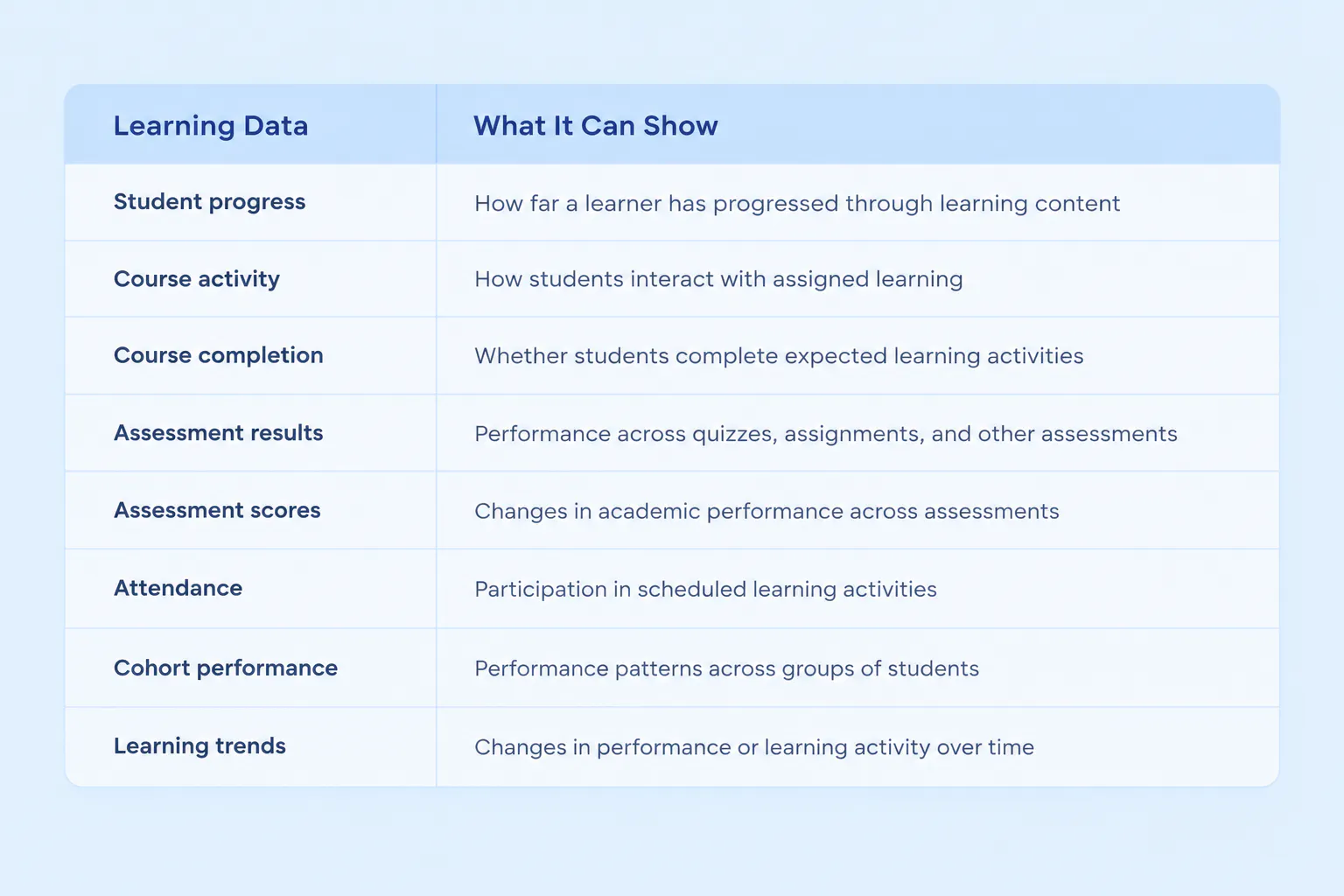
For example, an assessment result can show whether a student achieved a particular score, while progress data can provide context about how much of the related course content the student has completed.
How Can Schools Use Learning Analytics to Support Student Success?
Schools can use learning analytics to understand student progress, evaluate learning performance, identify gaps, and monitor changes in learning outcomes over time.
Student success is influenced by multiple aspects of the learning process. Progress, participation, assessment performance, and completion each provide different information about that process.
Learning analytics brings these signals into a common analytical context.
Schools can use the resulting information to:
- Monitor changes in student performance
- Compare performance across courses and cohorts
- Identify recurring weak areas
- Examine learning progress over time
- Understand assessment outcomes in context
- Review whether learning activities are being completed
- Use evidence to guide academic support
The objective is not to replace teacher judgment or classroom knowledge. Learning analytics adds another layer of evidence that can help schools understand student learning more systematically.
How Does Quyl Support Learning Analytics?
Quyl supports learning analytics through Smart Insights, which brings together learning and performance information to help educators and administrators understand how learners are progressing. It can surface patterns across available learning data and provide a clearer view of areas that may require attention.
With Smart Insights, teams can:
- Identify Strengths: Understand areas where learners are performing well.
- Spot Risks: Highlight performance patterns that may indicate learners need additional support.
- Find Weak Areas: Identify subjects, topics, or learning areas where performance may be lower.
- Review Trends: Monitor changes in learning performance and progress over time.
- Understand Learning Performance: Consider assessment results and progress alongside other available learning information.
- Identify Next Steps: Use recommended next steps from Smart Insights to guide further learning support or intervention.
Conclusion
Learning analytics gives schools a structured way to understand student learning through data. By connecting progress, course activity, assessments, completion, attendance, and performance trends, schools can build a clearer picture of how students are progressing and where learning gaps may exist.
When used alongside teacher knowledge and academic context, learning analytics can support more informed decisions about student performance and create a stronger evidence base for improving learning outcomes.

