
Key Takeaways
- The main difference between LMS and SIS is their purpose: an LMS manages teaching and learning, while an SIS manages student information and academic administration.
- An LMS supports learning activities, including courses, digital content, assignments, quizzes, Live Classes, and student progress.
- An SIS manages official student records, including enrollment, attendance, grades, fees, schedules, and academic information.
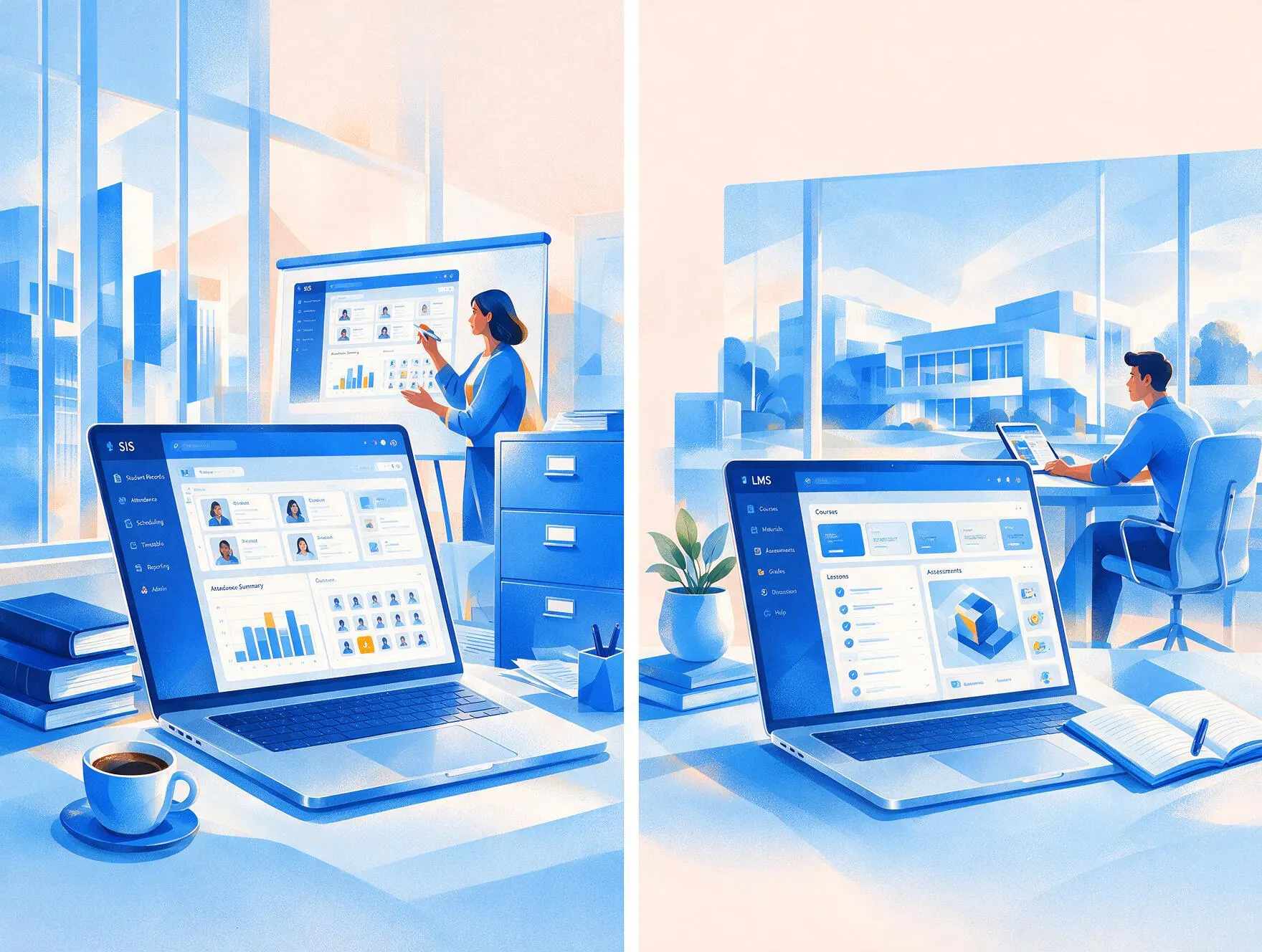
The main difference between an LMS and an SIS is their purpose: an LMS manages teaching and learning, while an SIS manages student information and academic administration. An LMS for school handles courses, content, assignments, assessments, and learning progress, while an SIS manages student records, enrollment, attendance, grades, and other institutional data.
As schools adopt more digital systems, understanding the role of each platform helps institutions choose the right technology for their needs. In this blog, we’ll compare LMS and SIS, their key features, differences, how they can work together, and which system schools may need.
What is an LMS?
A Learning Management System (LMS) is a platform that manages teaching and learning activities. Schools use an LMS to create courses, upload learning content, conduct assignments and quizzes, deliver Live Classes, track student progress, and analyse learning performance.
What does an LMS do?
- Creates and manages courses
- Delivers digital learning content
- Conducts assignments, quizzes, and assessments
- Supports Live Classes and online learning
- Manages learning paths and cohorts
- Tracks student participation and progress
- Provides learning analytics and reports
Read more: What is an LMS?
What is an SIS?
A Student Information System (SIS) is a platform that manages student information and academic records. Schools use an SIS to manage admissions, enrollment, attendance, student records, grades, fees, and other administrative information.
What does an SIS do?
- Manages student profiles and records
- Handles admissions and enrollment
- Tracks attendance
- Maintains grades and academic records
- Manages fees and payments
- Organises timetables and schedules
- Supports parent and school communication
- Generates administrative reports
Read more: 10 Must-Have Smart Classroom Tools for Modern Schools
Why Are SIS and LMS Often Confused?
SIS and LMS are often confused because both systems handle student-related academic information. Schools may use both platforms to store or display grades, track student activity, and generate reports, which can make their roles appear similar. However, each system manages a different part of the education process.
An LMS focuses on the learning process. Teachers use it to deliver courses, share learning materials, conduct assignments and assessments, manage discussions, and monitor how students perform during a course. The grades generated through LMS activities usually reflect a student’s performance within specific learning activities.
An SIS focuses on the student record. Schools use it to maintain official student information such as enrollment details, attendance records, academic history, grades, transcripts, and other institutional records. The SIS acts as the central source for formal student data.
The two systems can also work together. For example, a teacher can conduct an assessment in the LMS, while the resulting grade can be transferred to the SIS as part of the student’s official academic record.
- LMS = Learning and classroom activity
The LMS manages what students learn and how they participate in learning. - SIS = Student information and academic records
The SIS manages who the students are and their official academic information.
Read more: LMS vs ERP: Which System Do Schools Need?
LMS vs SIS: What is the difference?
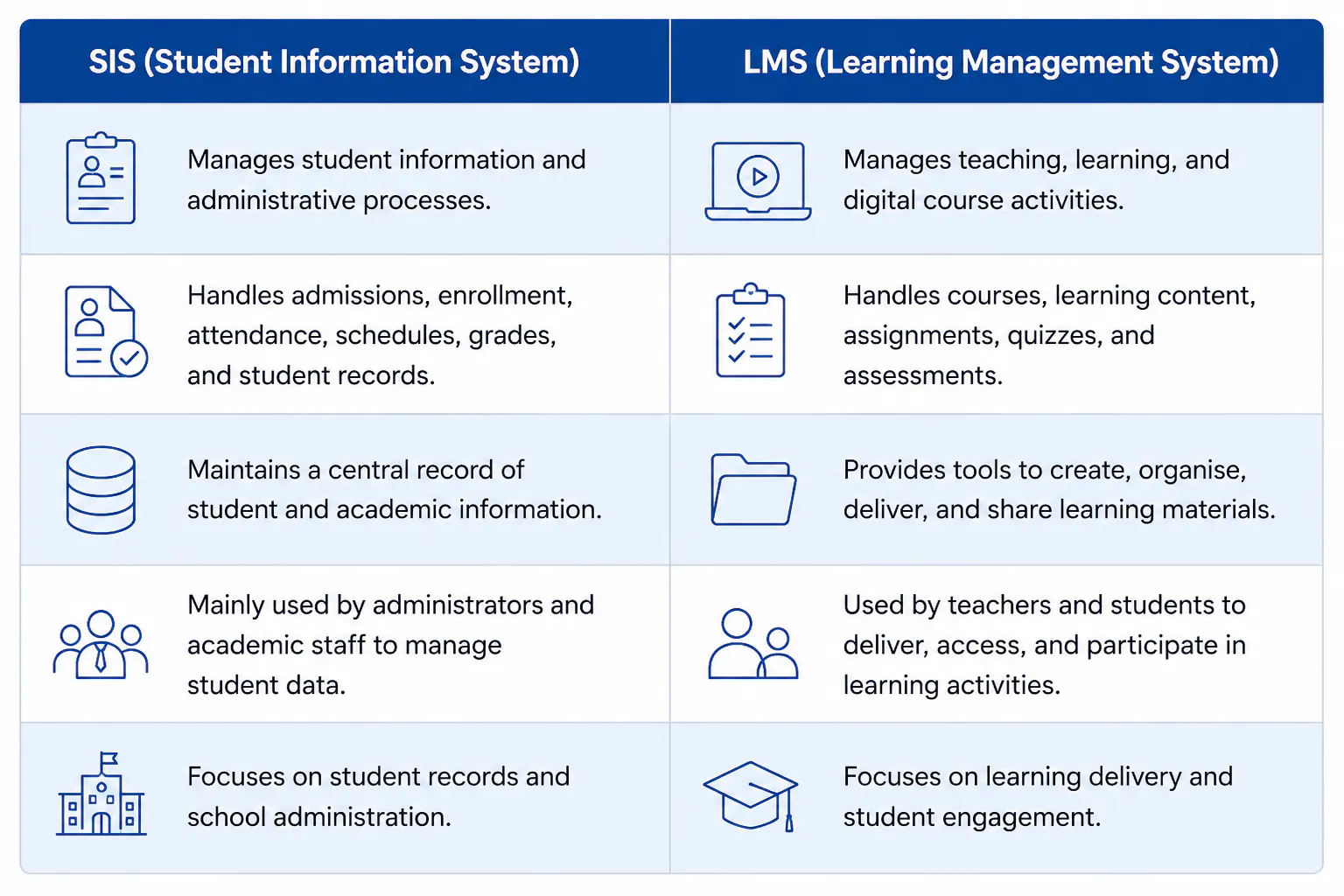
The main difference is the function each system manages. An LMS manages the learning experience, while an SIS manages student information and official academic records.
Conclusion
An LMS and SIS serve different but complementary purposes in a school. An LMS focuses on teaching and learning, helping teachers deliver courses, manage learning activities, assess students, and track progress. An SIS focuses on student information and administration, maintaining records such as enrollment, attendance, grades, and academic history.
Schools do not necessarily have to choose between the two. When an LMS and SIS work together, schools can connect classroom learning with official student records, reduce duplicate data entry, and create a more connected digital education environment.

