
Key Takeaways
- Successful cohort-based training combines live instruction, asynchronous content, practical activities, peer learning, and structured support.
- Purposeful interaction, timely feedback, and proactive learner support can strengthen engagement and progression.
- An LMS can bring cohort management, course delivery, assessments, communication, progress tracking, and learning analytics together in one environment.

Successful cohort-based training combines structured learning, live instruction, peer interaction, practical application, and continuous feedback to keep learners engaged and progressing toward measurable outcomes. Unlike purely self-paced training, cohort programs give participants a shared schedule and learning environment that encourages accountability and collaboration.
Institutions like Harvard Business School report completion rates of 85% for cohort programs, a stark contrast to the 5–15% typical in traditional self-paced courses. Success depends on more than grouping participants; effective programs integrate clear objectives, purposeful curriculum design, active engagement, and timely feedback, creating a learning environment that drives skill growth and meaningful results.
In this guide, we cover five practical tips for running effective cohort-based training programs and improving learner engagement, participation, and outcomes.
What Makes Cohort-Based Training Effective?
Effective cohort-based training connects structure with active learning. Learners follow a defined program while participating in live instruction, collaborative activities, assessments, and practical exercises.
A strong cohort program typically includes:
- Structured learning: Clear modules, milestones, deadlines, and learning objectives.
- Instructor interaction: Live sessions, Q&A, mentoring, and timely feedback.
- Peer learning: Discussions, group activities, peer reviews, and knowledge sharing.
- Practical application: Projects, simulations, case studies, and skills-based exercises.
- Learner support: Progress monitoring, reminders, guidance, and intervention when needed.
- Learning analytics: Data that helps instructors understand participation, performance, and completion.
5 Tips for Running Successful Cohort-Based Training Programs
1. Balance Live and Asynchronous Learning
Cohort programs work best when live instruction and independent learning complement each other. Live sessions create opportunities for discussion, demonstrations, questions, and instructor feedback, while asynchronous content allows participants to review concepts and complete activities around their schedules.
Effective approaches include:
- Use live sessions strategically: Reserve synchronous classes for discussion, demonstrations, workshops, Q&A, and activities that benefit from real-time interaction.
- Support sessions with asynchronous content: Provide recorded lessons, reading materials, exercises, and assessments between sessions.
- Make essential information accessible: Record important sessions or provide summaries for learners who cannot attend.
- Monitor participation: Use attendance and engagement data to determine whether the learning cadence is working.
The goal is not to maximize live instruction. It is to use synchronous and asynchronous learning where each format adds the most value.
2. Promote Active Practice and Real-World Application
Learners develop stronger practical skills when they apply concepts rather than simply consume course content. Cohort-based training should connect lessons with activities that require participants to solve problems, make decisions, or demonstrate a skill.
Useful approaches include:
- Scaffold practical exercises: Start with guided activities before moving learners toward independent application.
- Use authentic scenarios: Case studies, simulations, projects, and role-play can connect concepts with real situations.
- Provide timely feedback: Instructor and peer feedback helps learners correct mistakes while the subject matter is still fresh.
- Use interactive activities: Quizzes, collaborative assignments, simulations, and AI-supported exercises can reinforce concepts through practice.
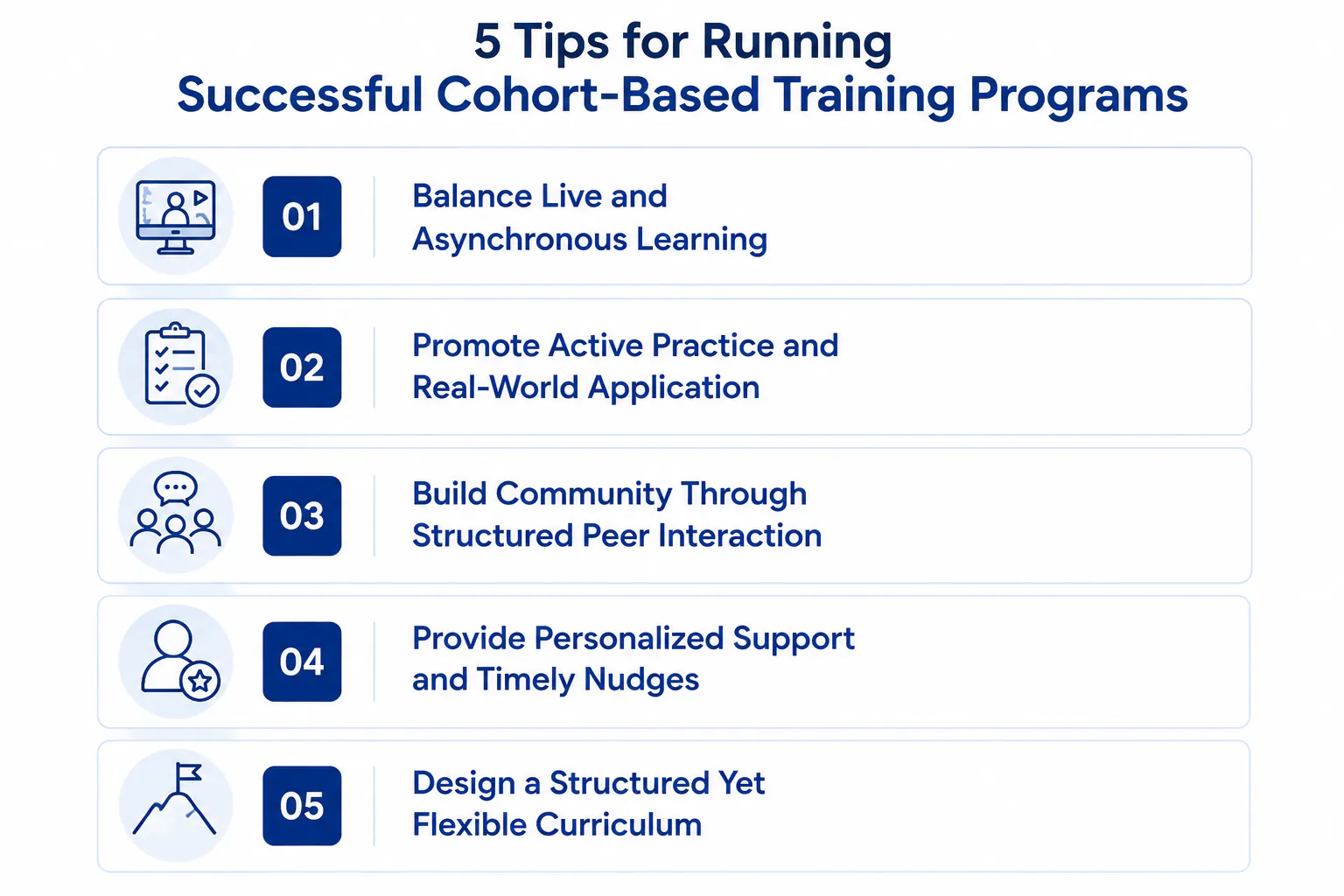
3. Build Community Through Structured Peer Interaction
Peer learning is a defining element of cohort-based education. However, simply placing learners in a discussion forum does not automatically create meaningful collaboration. Interaction should have a clear purpose connected to the learning objectives.
Effective tactics include:
- Use focused group discussions: Give learners specific questions or problems to discuss.
- Introduce peer reviews: Structured feedback allows participants to evaluate work and learn from different approaches.
- Create collaborative projects: Group assignments encourage communication, problem-solving, and knowledge sharing.
- Use dedicated communication spaces: Discussion boards, Teams, Slack, or integrated community features can support interaction between scheduled sessions.
Purposeful peer interaction can strengthen collaborative learning, learner engagement, accountability, and knowledge sharing while helping participants learn from perspectives beyond the instructor.
Read more: 10 Modern Learning Methods
4. Provide Personalized Support and Timely Nudges
Even within a structured cohort, learners can fall behind because of competing responsibilities, missed sessions, incomplete assignments, or difficulties with course material. Proactive support helps instructors identify these issues before they affect completion.
Implementation strategies include:
- Automate routine reminders: Notify learners about upcoming sessions, assignments, assessments, and deadlines.
- Identify disengagement early: Use learner activity data to identify participants who have stopped accessing content or participating.
- Provide targeted feedback: Use assessment results and learning activity to determine where additional guidance is needed.
- Reinforce learning goals: Remind participants about upcoming milestones and the skills they are developing.
- Offer individual support: Office hours, mentoring, or one-to-one check-ins can provide additional assistance.
5. Design a Structured Yet Flexible Curriculum
A successful cohort program needs enough structure to maintain momentum without making the learning experience unnecessarily rigid. The curriculum should connect learning objectives, content, activities, assessments, and milestones.
Core strategies include:
- Create clear learning paths: Organize modules and activities in a logical sequence.
- Separate required and optional activities: Help learners prioritize essential coursework while providing opportunities for additional practice.
- Build flexibility into the program: Recorded sessions and supplementary resources can accommodate different schedules.
- Use learner feedback: Review feedback to identify issues with pacing, workload, content, or activities.
- Connect activities with outcomes: Major assignments and assessments should contribute to defined learning objectives.
Read more: What Is Ed Tech?
How Can an LMS Support Cohort-Based Training?
An LMS can centralize the content, learners, activities, assessments, communication, and progress data required to manage cohort-based training. Instead of coordinating these elements across disconnected tools, training teams can manage the learner journey within one learning environment.
Useful learning management system capabilities include:
- Cohort management for grouping learners and assigning them to specific programs.
- Learning paths for organizing courses, modules, activities, and assessments.
- Assessment tools for quizzes, assignments, tests, and knowledge checks.
- Progress tracking for monitoring individual and group participation.
- Learning analytics for identifying participation trends, completion gaps, and assessment performance.
- Completion records for recognizing successful program completion.
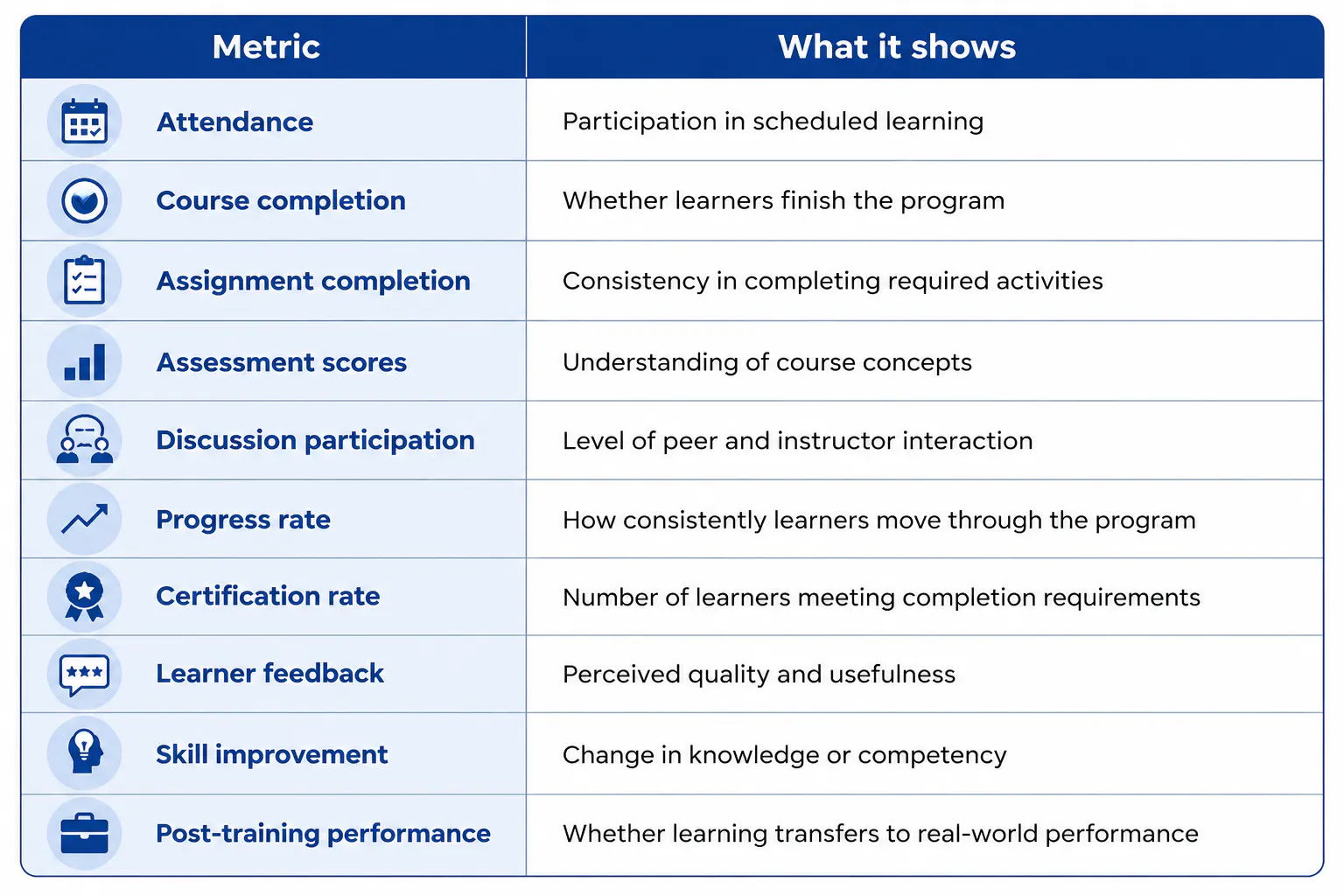
How Do You Measure the Success of Cohort-Based Training?
Cohort performance should be measured through both engagement metrics and learning outcomes. Attendance or course completion alone cannot show whether participants developed the intended knowledge or skills.
What Are the Common Mistakes to Avoid in Cohort-Based Training?
Poor program design can reduce the benefits of structure and collaboration. Common problems include:
- Too many live sessions: Excessive synchronous learning can create scheduling pressure without improving outcomes.
- Unclear learning objectives: Learners may complete activities without understanding the skills they are expected to develop.
- Unstructured group work: Collaboration without clear roles or outcomes can create uneven participation.
- Delayed feedback: Waiting until the end of a module can make it harder to correct misunderstandings.
- Ignoring disengaged learners: Small drops in participation can become larger completion problems when they are not addressed early.
- Measuring activity instead of learning: High attendance does not necessarily mean learners developed the intended skills.
- Using disconnected tools: Managing content, communication, assessments, and learner data across multiple systems can create unnecessary administrative work.
- Failing to improve each cohort: Learner feedback and performance data should inform changes to future program delivery.
Conclusion
Cohort-based training is most effective when structure and interaction work together. A shared schedule provides accountability, while live instruction, peer learning, practical activities, and timely feedback give learners opportunities to apply and reinforce what they learn.
The technology should support this experience rather than become the focus. With the right instructional design and an LMS that supports cohort management, assessments, communication, and learning analytics, organizations can create programs that are easier to manage and more engaging for learners.

