
Key Takeaways
- A flipped classroom reverses the traditional teaching model by having students study lesson content before class and use classroom time for discussions, problem-solving, collaboration, and practical activities.
- Flipped learning promotes active and personalised learning by allowing students to learn foundational concepts at their own pace while teachers focus on guidance, feedback, and individual support.
- An LMS can simplify flipped classroom implementation by organising pre-class content, assessments, schedules, progress tracking, and learning insights in one platform.

A flipped classroom is a teaching method where students study lesson content before attending class, while teachers use classroom time for discussions, problem-solving, practical activities, and concept clarification.
Traditional classrooms usually introduce new topics during class and assign homework afterward. A flipped classroom reverses this process. Teachers provide learning materials such as videos, presentations, reading resources, or digital lessons before class. Students review the content at their own pace, allowing classroom time to focus on applying concepts, solving problems, asking questions, and collaborating with classmates.
In this blog, we'll explain how a flipped classroom works, explore its benefits and challenges, compare it with traditional teaching, and understand how an LMS for schools can support the implementation of this modern learning approach.
What is a Flipped Classroom?
A flipped classroom is a teaching approach where students learn lesson content before class and use classroom time to apply their knowledge through discussions, problem-solving, practical activities, and collaborative learning. Instead of listening to lectures during class, students actively participate in learning with guidance from the teacher.
Read more: 10 Must-Have Smart Classroom Tools for Modern Schools
The Four Pillars of a Flipped Classroom
A successful flipped classroom is built on four key pillars: a flexible learning environment, student-centred learning, purpose-driven content, and teachers acting as learning guides. Together, these principles create an active learning environment where students prepare before class and use classroom time to apply, discuss, and strengthen their understanding.
Flexible Learning Environment
Teachers create flexible learning environments that support individual learning, group activities, and practical classroom exercises. Students learn through different methods based on the lesson and activity.
Student-Centered Learning
Students take responsibility for learning by reviewing lessons before class and participating in classroom activities. Teachers guide discussions and help students apply concepts.
Purpose Driven Content
Teachers prepare learning content that introduces key concepts before class. Students build foundational knowledge independently and use classroom time to strengthen their understanding.
Teacher as a Learning Guide
Teachers observe student progress, answer questions, provide feedback, and support learning throughout the lesson. Continuous guidance helps students improve their understanding and performance.
Read more: Best ICT Tools for Teaching and Learning
What Are the Benefits of a Flipped Classroom?
A flipped classroom benefits both teachers and students by making classroom learning more interactive, personalised, and effective. Teachers spend more time supporting learning, while students spend more time applying concepts instead of only listening to lectures.
- Improves Student Engagement – Students participate in discussions, collaborative activities, and problem-solving during class instead of passively listening to lectures.
- Supports Personalised Learning – Students learn lesson content at their own pace before class, while teachers provide individual guidance based on different learning needs.
- Increases Teacher-Student Interaction – Teachers spend more time answering questions, clearing doubts, and supporting students throughout the lesson.
- Strengthens Concept Understanding – Students apply concepts through practical activities and classroom discussions, helping them understand lessons more effectively.
- Develops Critical Thinking Skills – Students analyse information, solve problems, and participate in real-world learning activities that strengthen higher-order thinking skills.
- Improves Teaching Efficiency – Teachers reuse digital learning materials and dedicate classroom time to meaningful learning activities instead of repeating lectures.
- Provides Better Learning Insights – Teachers monitor classroom participation and student understanding more closely, making it easier to identify learning gaps and provide timely support.
- Improves Academic Performance – Students enter the classroom prepared, participate actively in learning, and build a deeper understanding of concepts, leading to better academic outcomes.
Read more: How Teachers Can Use an LMS to Track Student Attendance Effectively?
How to Implement a Flipped Classroom Model?
A flipped classroom works best when schools follow a structured implementation plan. Teachers should prepare learning resources, set clear expectations, and organise classroom activities that encourage active participation.
Step 1: Define Learning Goals
Teachers should identify the concepts, skills, and learning outcomes before planning lessons. Clear objectives help students understand what they need to learn before class and what they will practise during classroom sessions.
Step 2: Prepare Pre Class Learning Materials
Teachers should create or collect learning resources that students can study independently before class. Videos, presentations, reading materials, and interactive content should explain the basic concepts in a simple and engaging way.
Step 3: Set Clear Student Expectations
Teachers should explain how students should prepare before every lesson. Clear instructions about learning materials, deadlines, and classroom participation help students develop consistent learning habits.
Step 4: Plan Interactive Classroom Activities
Teachers should use classroom time for discussions, problem solving, group activities, practical exercises, and concept clarification. These activities help students apply what they learned before coming to class.
Step 5: Assess Student Understanding
Teachers should evaluate student learning through quizzes, assignments, discussions, or classroom activities. Continuous assessment helps teachers identify learning gaps and provide additional academic support when needed.
Step 6: Review and Improve the Learning Process
Teachers should collect student feedback, analyse learning outcomes, and refine lesson plans regularly. Continuous improvements make the flipped classroom more effective and ensure students achieve better learning outcomes.
Read more: What Is Just in Time Teaching (JiTT)?
What Are the Disadvantages of a Flipped Classroom?
A flipped classroom offers many benefits, but schools may face a few challenges during implementation. Proper planning, digital access, and student participation are essential for making this teaching model successful.
- Requires Student Self Discipline – Students must complete lessons before class to participate effectively in classroom activities.
- Depends on Technology Access – Students need reliable internet access and suitable digital devices to study learning materials outside the classroom.
- Increases Teacher Preparation Time – Teachers need additional time to create digital lessons, organise resources, and plan interactive classroom activities.
- Relies on Student Preparation – Classroom discussions become less effective when students attend class without reviewing the lesson beforehand.
- Needs Teacher Training – Teachers must understand flipped learning strategies and digital tools to implement the model successfully.
- May Face Initial Resistance – Some teachers, students, and parents may need time to adapt to a different teaching and learning approach.
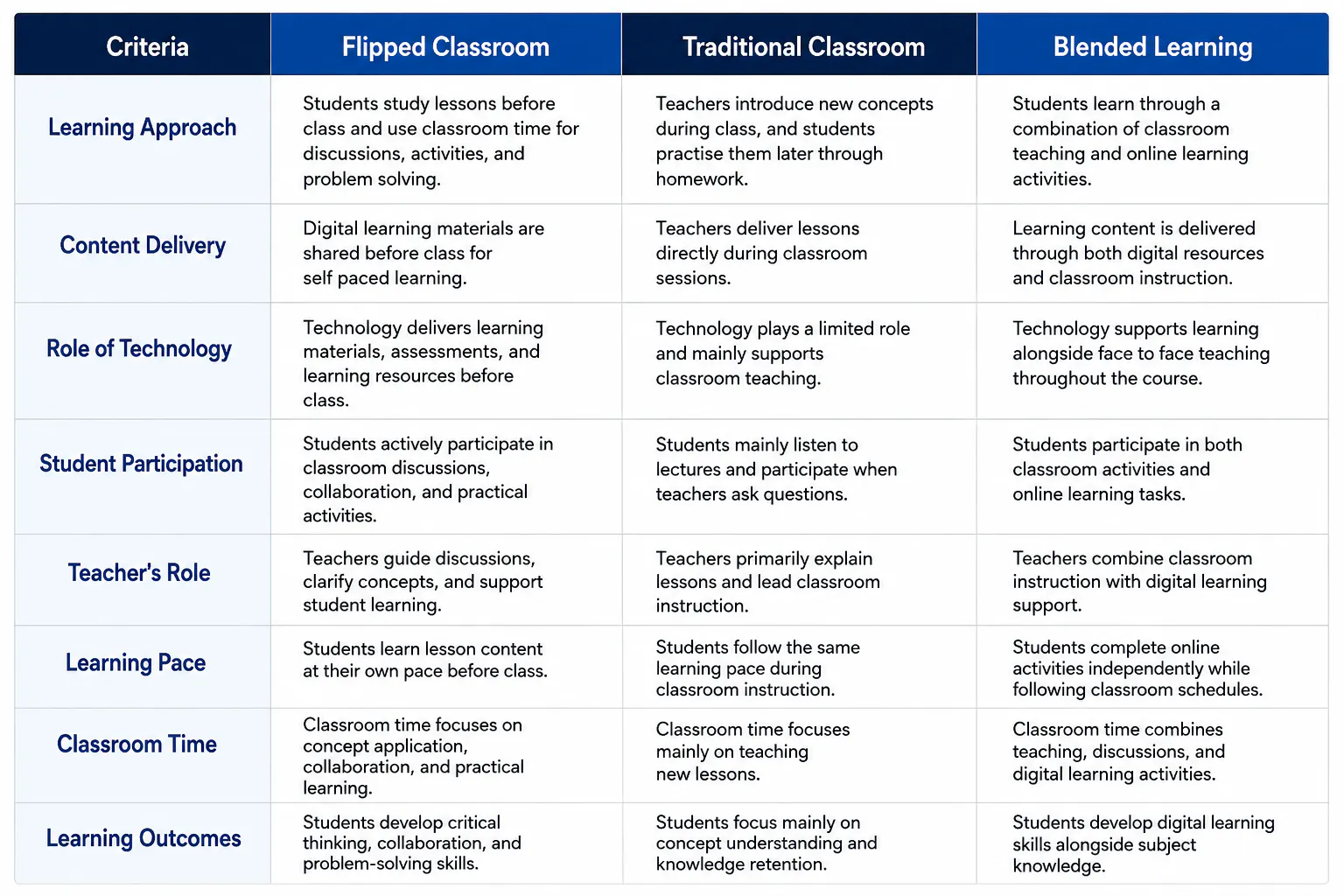
Flipped Classroom vs Traditional Classroom vs Blended Learning
Challenges of Implementing a Flipped Classroom and How Quyl Helps
A flipped classroom requires proper planning, structured learning resources, and continuous student engagement. Here's how Quyl helps schools overcome the most common implementation challenges.
- Challenge: Students may not complete lessons before class.
How Quyl Helps: Teachers can organise videos, files, links, and learning resources into structured courses. Chapter wise quizzes and assignments help verify whether students completed their pre class learning. - Challenge: Teachers spend extra time preparing lessons.
How Quyl Helps: Teachers can create, organise, and reuse course content, quizzes, and assignments from one platform, reducing lesson preparation time. - Challenge: Teachers cannot easily monitor student progress.
How Quyl Helps: Learning Progress Tracking and Smart Insights allow teachers to monitor course completion, assessment results, and student performance from a single dashboard. - Challenge: Schools struggle to organise learning resources.
How Quyl Helps: The Course Builder keeps chapters, files, videos, assignments, quizzes, and learning resources organised in one structured learning environment. - Challenge: Managing classroom schedules becomes difficult.
How Quyl Helps: Schedule and Calendar Tools help teachers organise live classes, academic calendars, assignment deadlines, and classroom activities from one place. - Challenge: Schools find it difficult to identify students who need support.
How Quyl Helps: Smart Reports and AI Powered Insights analyse student performance and help teachers identify learning gaps early so they can provide timely academic support.

