
Key Takeaways
- Asynchronous learning allows students to access lessons, complete activities, and study at flexible times without attending a live class at a fixed time.
- It supports flexibility, self-paced learning, content repetition, accessibility, and different learning needs, but can create challenges with motivation, time management, interaction, and progress monitoring.
- Schools can deliver effective asynchronous learning through an LMS, structured digital content, self-paced activities, assessments, progress tracking, feedback, and Live Classes when additional support is needed.

Asynchronous learning is a learning method that allows students to access lessons, complete activities, and study at different times instead of attending a live class at a fixed time. The approach gives students greater control over their learning schedule while teachers provide digital resources, assignments, assessments, and feedback through an online learning platform.
In this blog, we explain how asynchronous learning works, its key components, types, benefits, disadvantages, and implementation strategies, along with how an LMS can support flexible learning at scale.
What Is Asynchronous Learning?
Asynchronous learning is a type of distance learning model that allows students to access learning content, complete activities, and submit assignments without attending lessons at a fixed time. Teachers provide digital resources such as recorded lectures, videos, reading materials, assignments, quizzes, and discussion forums, while students complete learning activities according to their own schedules.
Examples of asynchronous learning include recorded online classes, self-paced courses, discussion boards, email-based instruction, digital assignments, and pre-recorded video lessons.
Asynchronous learning offers greater flexibility, but the model can reduce opportunities for direct interaction between students and teachers. Students may also need stronger self-discipline to stay consistent with their coursework. Many schools combine asynchronous learning with synchronous sessions to provide both flexible study options and real-time academic support.
Read more: What is Learner Autonomy?
What Are the Benefits of Asynchronous Learning?
Asynchronous learning gives students greater control over when and how they complete their learning activities. The model also gives teachers more flexibility to organise digital content and support different learning needs.
- Provides Flexible Learning – Students access lessons and complete coursework at times that suit their schedules.
- Supports Self-Paced Learning – Students spend more time on difficult concepts and move faster through familiar topics.
- Allows Content Repetition – Students revisit recorded lessons, notes, and other resources whenever they need revision.
- Supports Different Learning Needs – Students use learning materials according to their individual pace and academic requirements.
- Extends Learning Beyond Class Hours – Students continue learning outside scheduled classroom sessions.
- Improves Resource Accessibility – Students access digital materials from different locations and devices.
- Reduces Scheduling Conflicts – Schools deliver learning content without requiring every student to attend at the same time.
Read more: 10 Questions to Ask Your LMS Vendor
What Are the Limitations of Asynchronous Learning?
Asynchronous learning provides flexibility, but the model also creates challenges around communication, motivation, time management, and student engagement. Schools can reduce these limitations by combining structured learning activities, regular teacher support, and progress monitoring.
- Delayed Feedback – Students may wait for teacher responses.
- Limited Social Interaction – Students may have fewer real time interactions.
- Time Management – Students may struggle to organise independent study.
- Lower Motivation – Students may lose consistency without regular guidance.
- Engagement Challenges – Self-paced learning may reduce participation.
- Technology Dependence – Connectivity or device problems can interrupt learning.
- Progress Monitoring – Teachers may need additional tools to track student learning.
How to Deliver Asynchronous Learning Sessions?
Schools can deliver asynchronous learning by organising digital content, independent activities, assessments, and teacher support through an LMS. A structured approach helps students learn independently while giving teachers clear ways to monitor and support progress
Step 1: Set Clear Learning Goals
Teachers should define the concepts and skills that students need to learn. Clear objectives help teachers select suitable resources and activities for independent study.
Step 2: Prepare Digital Learning Content
Teachers should create recorded lessons, presentations, videos, reading materials, and other digital resources. Teachers should organise content into manageable sections so students can complete lessons without constant supervision.
Step 3: Organise Content Through an LMS
Schools should use an LMS to arrange lessons, resources, assignments, and assessments in a structured learning path. A centralised learning environment helps students access the right content and complete activities in the correct order.
Step 4: Add Self-Paced Learning Activities
Teachers should provide quizzes, assignments, practice exercises, and discussion activities after each lesson.
Step 5: Provide Live Classes When Needed
Teachers should use the Live Classes feature to provide real time support when students need additional explanation. Live sessions can support doubt clarification, revision, discussions, and topics that require direct teacher guidance.
Step 6: Track Student Progress
Teachers should monitor lesson completion, assignment submissions, quiz results, and learning activity. Progress data helps teachers identify students who need additional academic support.
Step 7: Provide Feedback and Improve Learning
Teachers should review student work and provide timely feedback through the LMS. Schools should use student performance and feedback to improve learning resources and future asynchronous sessions.
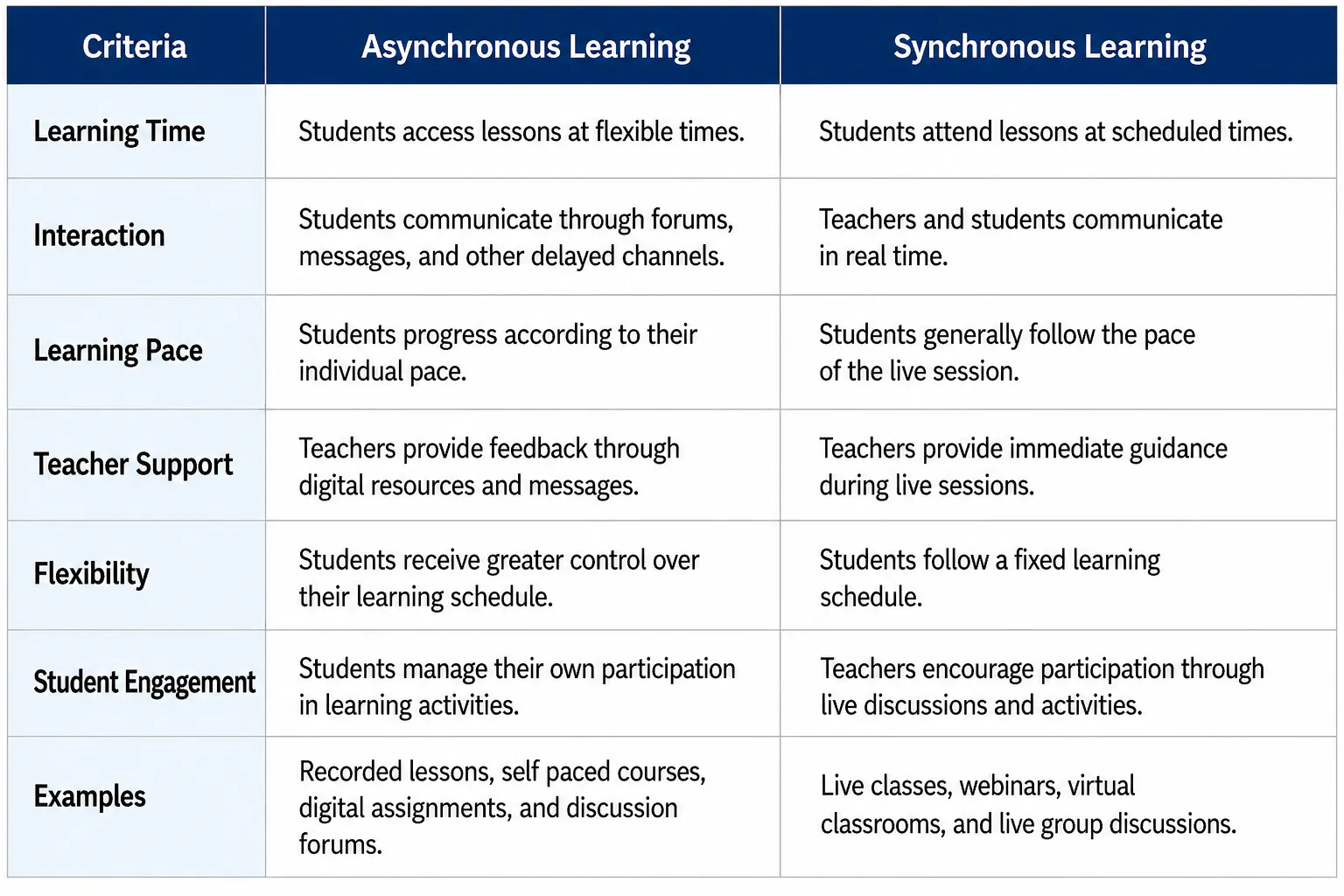
Asynchronous Learning vs Synchronous Learning
Asynchronous learning allows students to learn at flexible times, while synchronous learning requires teachers and students to participate at the same scheduled time. The two approaches differ mainly in their timing, interaction, learning pace, and level of teacher support.
Conclusion
Asynchronous learning is most effective when students need flexibility, self paced progress, and access to learning materials beyond scheduled class hours. However, flexibility needs structure. Clear learning goals, organised digital content, regular activities, assessments, feedback, and progress tracking help students stay on track without constant live instruction.
An LMS brings these elements together while giving teachers visibility into student progress and the ability to provide live support when needed. For many schools, combining asynchronous learning with targeted live sessions can provide both flexible study and timely teacher guidance.

