
Key Takeaways
- Synchronous learning is a teaching method where teachers and students participate in learning activities at the same time through live, real-time sessions.
- Synchronous learning supports real-time interaction, immediate feedback, student engagement, collaboration, and structured learning through live classes and interactive activities.
- Schools can implement synchronous learning effectively by using the right learning platform, clear objectives, interactive sessions, reliable technology, participation tracking, and ongoing student support.

Synchronous learning is a teaching method in which teachers and students participate in learning activities simultaneously. Teachers deliver lessons through live classes, discussions, demonstrations, and interactive activities, while students ask questions, share ideas, and receive immediate feedback during the session.
Synchronous learning creates real-time interaction between teachers and students. Live classrooms, virtual meetings, webinars, and online discussions allow students to communicate directly with teachers and classmates during scheduled learning sessions. This approach creates a structured learning environment while giving students immediate opportunities to clarify concepts and participate in classroom activities.
In this blog, you will get to know how synchronous learning works, examine its key features and benefits, discuss its challenges, and explain how an LMS for schools can support live and real-time learning.
What Is Synchronous Learning?
Synchronous learning is a teaching method in which teachers and students participate in learning simultaneously through live sessions. Teachers deliver lessons, students participate in discussions and activities, and both groups communicate in real time. The model provides immediate feedback, direct teacher support, and structured learning through scheduled classes.
What Are the Key Components of Synchronous Learning?
- Live Instruction – Teachers deliver lessons at scheduled times and explain concepts in real time.
- Real Time Communication – Students ask questions, share ideas, and interact directly with teachers.
- Interactive Activities – Teachers conduct discussions, quizzes, demonstrations, and learning activities during live sessions.
- Collaboration Tools – Students work together through group discussions, shared tasks, and virtual activities.
- Immediate Feedback – Teachers review student responses and provide timely guidance during lessons.
- Digital Learning Platforms – LMS and virtual classroom tools connect teachers, students, schedules, and learning resources.
Read more: What is an LMS?
What Are the Types of Synchronous Learning?
Synchronous learning takes different forms based on how teachers deliver lessons and how students participate in real time. Common types include live classroom sessions, virtual discussions, group activities, and direct communication.
- Live Virtual Classes – Teachers conduct scheduled online lessons while students join the session, ask questions, and participate in classroom activities.
- Live Webinars and Seminars – Experts deliver focused sessions to larger groups while students participate through questions, polls, chats, and discussions.
- Virtual Breakout Sessions – Teachers divide students into smaller groups where students collaborate on projects, discussions, or problem-solving activities.
- Live Chat and Messaging – Teachers and students communicate through real-time messages to answer questions, clarify concepts, and provide quick academic support.
- Face-to-Face Classes – Teachers and students attend the same physical classroom at the same time and interact directly through lessons, discussions, and activities.
Read more: 10 Must-Have Smart Classroom Tools for Modern Schools
What Are the Benefits of Synchronous Learning?
Synchronous learning creates real time interaction between teachers and students. Live sessions also give students structured learning opportunities and allow teachers to respond to learning needs immediately.
- Improves Real Time Interaction – Live sessions allow students to ask questions, discuss ideas, and receive immediate responses from teachers.
- Increases Student Engagement – Interactive discussions, polls, quizzes, and group activities encourage students to participate throughout the lesson.
- Provides Immediate Feedback – Teachers identify misunderstandings during live sessions and provide explanations before learning gaps become larger.
- Creates a Sense of Connection – Regular interaction helps students build stronger relationships with teachers and classmates.
- Builds Learning Discipline – Scheduled classes give students a fixed learning routine and encourage consistent participation.
- Supports Collaborative Learning – Group discussions and shared activities allow students to exchange ideas and solve problems together.
Read more: 8 Ways an LMS Increases Student Engagement
What Are the Disadvantages of Synchronous Learning?
Synchronous learning also creates practical challenges for schools, teachers, and students. Fixed schedules and technical requirements can affect participation and learning continuity.
- Creates Scheduling Constraints – Fixed class timings can make participation difficult for students with different schedules or time commitments.
- Depends on Technology – Poor internet connections, device problems, and power interruptions can disrupt live learning sessions.
- Requires Consistent Attendance – Students who miss a live session may lose access to important explanations, discussions, or activities.
- Limits Learning Flexibility – Fixed sessions give students less freedom to choose when they want to study.
- Increases Teacher Preparation – Teachers need to prepare live lessons, activities, digital resources, and technical setups before each session.
- Creates Participation Differences – Some students may participate actively during live sessions, while quieter students may need additional support to contribute.
Read more: What Is the Difference Between an SIS and an LMS?
How to Implement a Synchronous Learning Strategy?
Schools can implement synchronous learning by combining clear learning objectives, structured live sessions, reliable technology, and continuous student support. The following steps can help teachers create a consistent and effective synchronous learning experience.
- Set Clear Learning Objectives
Teachers should define the knowledge and skills that students need to develop before planning each live session. - Choose the Right Learning Platform
Schools should select an LMS or virtual classroom platform that supports live classes, communication, content sharing, assessments, and student progress tracking. - Prepare Digital Learning Resources
Teachers should organise presentations, videos, documents, activities, and other learning materials before each session. - Create an Interactive Session Plan
Teachers should combine explanations with discussions, quizzes, demonstrations, polls, and problem-solving activities to maintain student participation. - Set Clear Participation Guidelines
Teachers should explain attendance requirements, discussion rules, assignment deadlines, and appropriate online behaviour to students. - Provide Real-Time Support
Teachers should answer questions, clarify concepts, and provide feedback during live sessions to address learning gaps immediately. - Monitor Student Participation
Teachers should track attendance, activity completion, assessment results, and classroom participation to understand student progress. - Record and Share Learning Sessions
Schools should provide recorded sessions or learning resources to students who miss live classes or need additional revision. - Review Learning Outcomes
Teachers should use assessments and student feedback to evaluate each session and improve future synchronous learning activities.
Read more: What is Learner Autonomy?
Synchronous Learning vs Asynchronous Learning
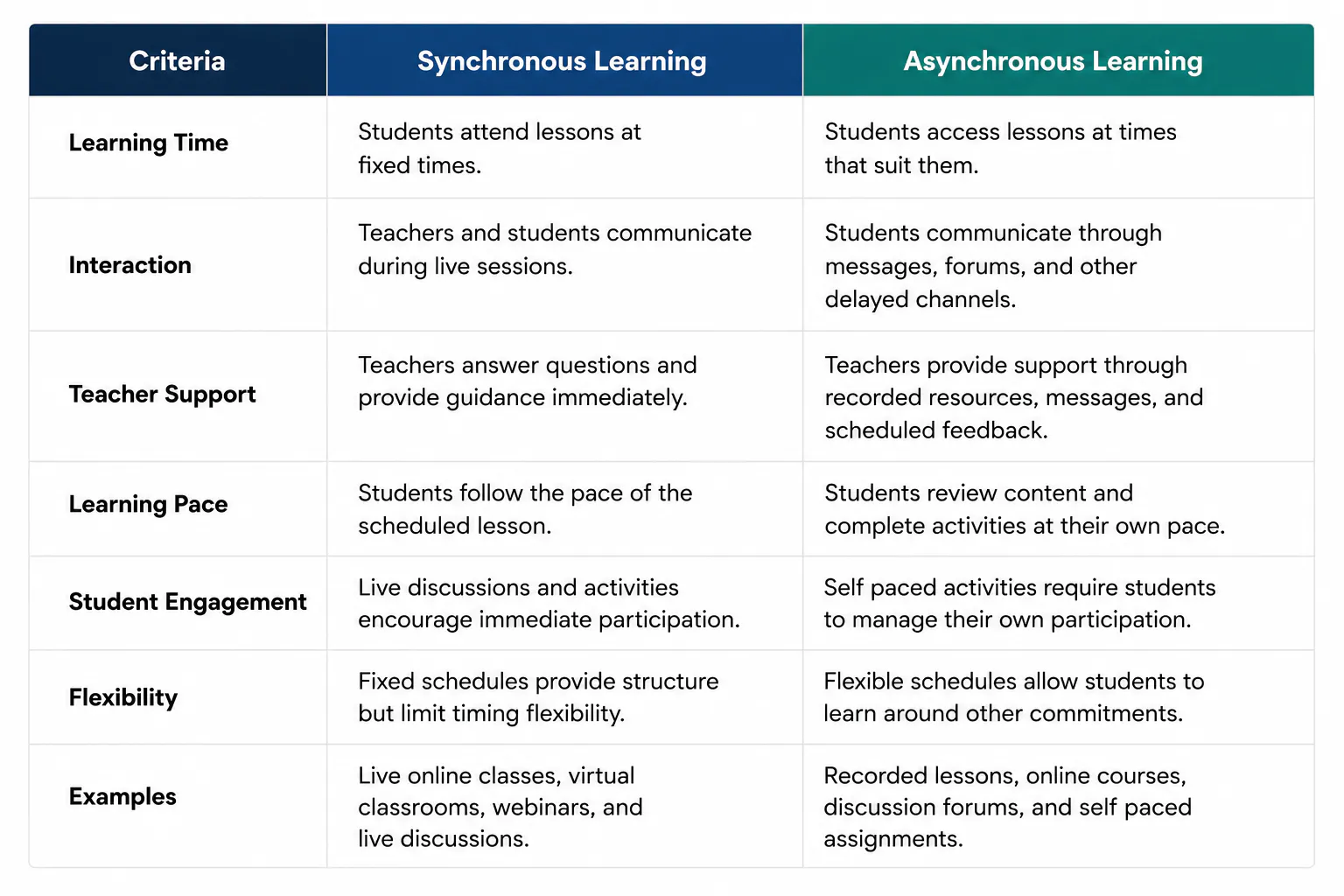
Synchronous learning happens in real time through scheduled lessons, while asynchronous learning allows students to access lessons and complete activities at flexible times. Synchronous learning provides immediate interaction and teacher support, while asynchronous learning gives students greater control over their learning pace and schedule.
Read more: What Is the Difference Between Asynchronous and Synchronous Learning?
Conclusion
Synchronous learning brings teachers and students together for real time instruction, interaction, collaboration, and feedback. While fixed schedules and technology requirements can create challenges, a well planned approach can make live learning more engaging and structured.
With the right LMS, teachers can manage live classes, attendance, learning resources, assessments, and student participation from one place. By combining synchronous sessions with flexible learning resources, schools can create a more connected and effective learning experience.

