
Key Takeaways
- Google Classroom is simple and easy to use, but schools may need more advanced features as their digital learning needs grow.
- Quyl offers an all-in-one platform for schools, combining learning, assessments, student management, reporting, and academic administration.
- Moodle is a strong choice for schools that prioritize customization, flexibility, and control over their learning environment.
- Canvas provides intuitive course management, grading, analytics, and integrations for schools managing larger learning environments.
- Blackboard is suited to larger institutions that require enterprise-level learning, analytics, accessibility, and academic management capabilities.
Google Classroom has become one of the most widely used learning platforms because of its simplicity, seamless integration with Google Workspace, and free access for educational institutions. It enables teachers to create classes, share assignments, communicate with students, and manage coursework efficiently, making it a practical choice for digital and hybrid learning.
As educational needs evolve, many institutions require capabilities that extend beyond basic classroom management. Features such as AI assisted assessments, structured course management, live classes, detailed reporting, cohort management, enrollment tracking, and institution wide administration have become essential for delivering engaging and scalable learning experiences.
In this guide, you'll explore the best Google Classroom alternatives, compare their features, strengths, limitations, and ideal use cases, helping you choose the right learning management system for your institution's teaching, learning, and administrative needs.
What is Google Classroom?
Google Classroom is a cloud based learning management platform that helps teachers create virtual classrooms, share learning materials, assign coursework, and communicate with students. Its integration with Google Workspace makes it a popular choice for schools adopting digital and hybrid learning.
Google Classroom simplifies classroom management by allowing educators to organize courses, distribute assignments, provide feedback, and collaborate with students from a single platform. While it is easy to use and accessible, growing institutions often require additional features to support large scale teaching and academic administration.
Read more: Google Classroom vs LMS: Which Is Better for Schools?
Pros of Google Classroom
- Free for eligible educational institutions.
- Simple and easy to use.
- Seamless Google Workspace integration.
- Easy assignment creation and grading.
- Real time teacher and student communication.
- Accessible on desktop and mobile devices.
Why are schools switching from Google Classroom?
As schools expand their digital learning initiatives, many require capabilities beyond basic classroom management. Common limitations include:
- No built in fee or payment management.
- Limited live class flexibility beyond Google Meet.
- No built in class scheduling or booking tools.
- Basic analytics and reporting.
- Limited integrations for broader school management.
- Lacks advanced academic administration and automation.
These limitations have led many schools, colleges, coaching centres, and training providers to adopt more comprehensive learning management systems that combine teaching, assessments, administration, communication, and reporting within a single platform.
What Are The Best Alternatives to Google Classroom?
The best alternatives to Google Classroom include Quyl, Moodle, Canvas,& Blackboard. Each platform offers a different combination of course management, assessments, AI powered learning, live classes, analytics, and administrative tools to meet the needs of schools, colleges, and training institutions.
If you're looking for a platform that goes beyond basic classroom management, these are some of the best Google Classroom alternatives to consider.
Quyl
Why it stands out
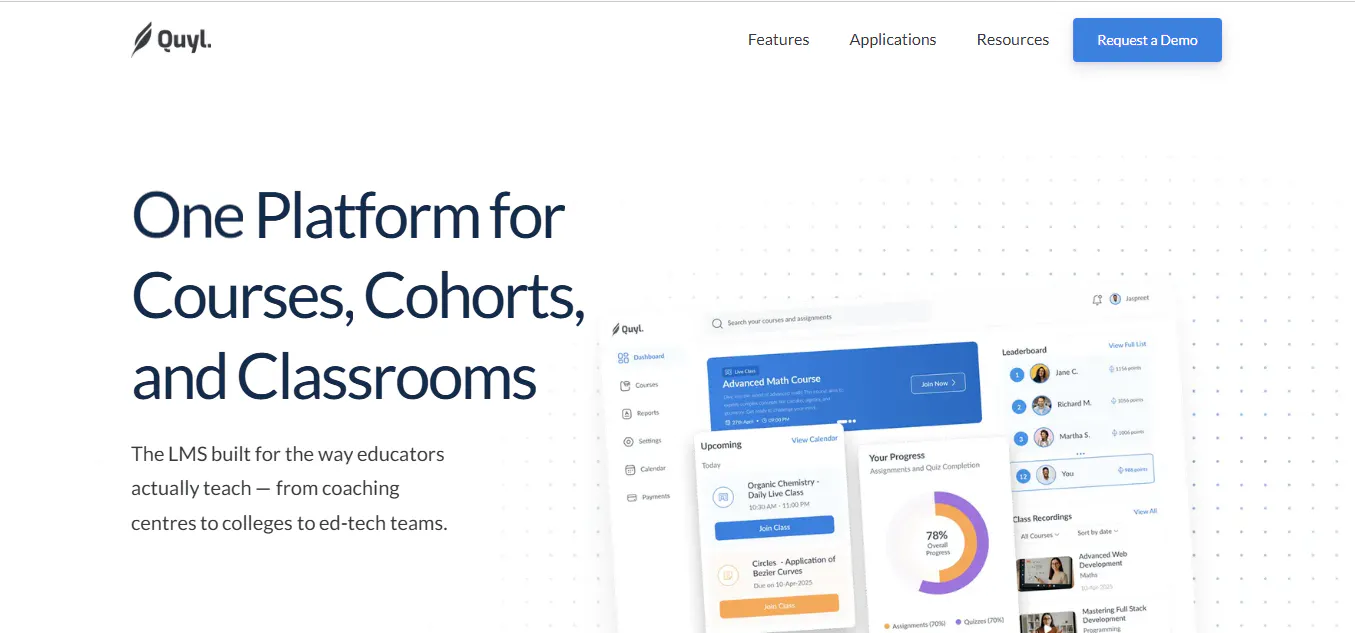
Quyl is a comprehensive learning management system that brings course delivery, assessments, live classes, academic administration, and student progress tracking into one connected platform. Instead of relying on multiple tools, educators and administrators can manage the entire learning journey from a single dashboard, making teaching more efficient and learning more organized.
Top features
- Structured course creation for building courses with files, videos, links, and interactive content.
- Assignments and quizzes for creating questions, sections, and multiple-choice assessments.
- Grading and assessment tracking for teachers to grade work and students to view grades and performance.
- Live class management for recurring events, meeting links, reminders, and time-zone support.
- Cohort management for creating learner groups, adding students, setting dates, and assigning courses or bundles.
- Student progress tracking for monitoring course progress and learning activity.
- Smart Insights for identifying strengths, risks, weak areas, trends, and evidence-linked next steps.
- Quyl Assistant for read-only contextual questions across courses, students, assessments, events, payments, and Smart Insights.
- Attendance management for recording Present, Absent, Late, and Excused statuses with CSV support.
- School administration for managing school details, domain, support contact, timezone, course categories, and school-level settings.
- School branding for managing the school logo, colours, and theme.
- Academic terms and holidays for configuring school terms and holidays within school setup.
- Parent access for multi-child access, student progress, guardian invitations, and payments.
- Fee and payment management with Razorpay, manual bank or QR payments, plans, discounts, and manual billing.
- AI tools including AI credits, AI covers, AI rich text, and AI-generated quiz questions.
Pricing
Custom pricing.
When to choose Quyl
Choose Quyl if you need a modern LMS that combines teaching, assessments, student management, reporting, and academic administration in one platform, helping institutions reduce manual work and deliver a more connected learning experience.
Moodle
Why it stands out
Moodle is one of the most widely adopted open source learning management systems, offering extensive customization and flexibility for educational institutions. Its large plugin ecosystem, customizable workflows, and strong security make it a preferred choice for universities and organizations with dedicated IT teams.
Top features
- Customizable course creation with multimedia content and flexible learning activities.
- Open source platform that gives institutions complete control over data, security, and customization.
- 2,000+ plugins and certified integrations to extend platform capabilities.
- Gradebook and learner progress tracking for monitoring academic performance.
- Competency frameworks and learning plans to support structured skill development.
- Collaborative learning tools including forums, messaging, workshops, and blogs to improve student engagement.
- Gamification features such as badges, certificates, and leaderboards to encourage participation.
- Custom reports and analytics to measure learner progress and course effectiveness.
- Mobile learning and offline access for greater flexibility across devices.
- Accessibility and multilingual support with WCAG compliance and 160+ language options.
- Enterprise grade security and scalability with privacy controls and GDPR compliance.
Pricing
- MoodleCloud Starter: Approximately $160 USD/year for up to 50 users and 1 GB of storage.
- Enterprise and self hosted deployments: Custom pricing based on hosting and implementation requirements.
When to choose Moodle
Choose Moodle if your institution requires a highly customizable learning management system, complete control over data, and the flexibility to build a tailored learning environment with extensive integrations and plugins.
Canvas
Why it stands out
Canvas is a cloud based learning management system known for its modern interface, intuitive teaching experience, and extensive integration ecosystem. It simplifies course delivery, grading, and collaboration while providing the scalability needed for schools, colleges, and universities.
Top features
- Intuitive course management that makes creating and organizing learning content simple.
- SpeedGrader for faster grading, annotations, and personalized student feedback.
- Gradebook and performance tracking to monitor learner progress in real time.
- Blueprint Courses to standardize course content across multiple classes.
- Canvas Data and reporting tools for measuring student engagement and learning outcomes.
- 1,000+ integrations with educational and productivity tools for a connected learning environment.
- Dedicated mobile apps for students, teachers, and parents to support learning anywhere.
- Accessibility features that promote inclusive learning for diverse student needs.
- Cloud based infrastructure that delivers high availability and scales as institutions grow.
Pricing
Custom pricing based on institution size, selected features, and deployment requirements.
When to choose Canvas
Choose Canvas if you want a user-friendly, cloud based LMS with strong course management, grading tools, analytics, and a large integration ecosystem, especially for colleges, universities, and institutions managing large numbers of learners.
Blackboard
Why it stands out
Blackboard is an enterprise grade learning management system built for higher education and large institutions. It combines course management, accessibility, learner engagement, analytics, and institutional effectiveness tools in a single platform, helping educators deliver high quality learning experiences at scale.
Top features
- Comprehensive course management that supports online, hybrid, and in person learning.
- Built in accessibility tools to create inclusive learning experiences for all students.
- Teaching assistance features that help educators create content and streamline routine tasks.
- Learning analytics and institutional reporting to monitor student performance and support data driven decisions.
- Assessment and grading tools that simplify evaluations and provide timely feedback.
- Video learning and collaboration tools for more interactive and engaging classes.
- Institutional effectiveness solutions to measure academic outcomes and accreditation goals.
- Scalable cloud platform designed to support large institutions and growing learner communities.
Pricing
Custom pricing.
When to choose Blackboard
Choose Blackboard if your institution needs an enterprise level LMS with advanced accessibility, analytics, academic reporting, and institutional management capabilities, particularly for higher education or large scale learning environments.

