
TL;DR
- The main difference between an LMS and an eLearning platform is that an LMS manages the entire learning process, while an eLearning platform primarily delivers digital learning content.
- An LMS includes course management, assessments, learner tracking, reporting, and analytics, whereas eLearning platforms focus mainly on online course delivery and self-paced learning.
- Schools and training institutions should choose an LMS for structured learning management, while eLearning platforms are ideal for providing access to digital learning content.

If you have heard of terms like LMS and eLearning platforms, you must have noticed that they are often used interchangeably in the digital education space. While both solutions support digital learning, they serve different purposes in how schools, educators, and organizations create, deliver, and manage learning experiences.
An eLearning platform mainly focuses on providing digital courses, learning resources, and online content access. A learning management software goes beyond content delivery by helping institutions create courses, manage learners, conduct assessments, track progress, and analyze learning outcomes through a centralized system.
Understanding the difference between an LMS and an eLearning platform helps schools choose the right technology for their learning goals. In this blog, we will compare LMS vs eLearning platforms, their key differences, benefits, and how modern LMS solutions combine both learning delivery and management capabilities.
What is the difference between LMS and eLearning platforms?
The main difference between an LMS and an eLearning platform is that a learning management software manages the complete learning process, while an eLearning platform focuses mainly on delivering digital learning content.
An eLearning platform is designed to provide access to online courses, videos, tutorials, and digital resources. It helps learners consume educational content through a digital environment but usually offers limited tools for managing learners, assessments, and academic operations.
A Learning Management System (LMS) provides a complete framework for managing education and training. An LMS for schools helps teachers to create courses, deliver learning materials, conduct assessments, track student progress, and manage learners, while a corporate LMS supports employee training, learning activities, performance tracking, and development.
What is an LMS?
A Learning Management System (LMS) is a digital platform that helps schools, organizations, and educators create, manage, deliver, track, and evaluate learning activities through courses, assessments, and learner management tools.
An LMS works as a centralized system where administrators, teachers, and students can manage the complete learning process. It supports course creation, student enrollment, assessments, progress tracking, reporting, and communication.
Key features of an LMS include:
- Course creation and management: Create structured courses using videos, files, links, and interactive content.
- Student management: Manage learner enrollment, groups, and learning paths.
- Assessments and grading: Create quizzes, assignments, and evaluate student performance.
- Progress tracking: Monitor learner activity, completion rates, and academic outcomes.
- Reports and analytics: Generate insights to understand learning performance.
- Live learning support: Enable online classes and blended learning experiences.
- Automation tools: Reduce repetitive academic and administrative tasks.
Read more: A Complete Guide to Learning Management System
What is an eLearning platform?
An eLearning platform is a digital learning solution that provides access to online courses, educational content, and learning resources through an internet based platform.
An eLearning platform focuses on delivering digital learning experiences by allowing users to access courses, watch videos, complete lessons, and learn at their own pace.
Key features of an LMS include:
- Course Creation and Content Management: Create structured courses using videos, files, links, and interactive resources.
- Assessments and Auto Grading: Create quizzes, assignments, and evaluate student performance efficiently.
- Cohort and Learner Management: Organize students into groups, assign courses, and monitor learner progress.
- Smart Insights and Reports: Analyze student performance through data driven insights and reports.
- AI Powered Automation: Use AI assisted tasks and automation to reduce manual work and improve efficiency.
- Live Classes and Digital Learning: Support online and blended learning through live sessions and video integration.
- Enrollment and Progress Tracking: Monitor student activity, engagement, and learning outcomes.
- Schedule and Calendar Management: Plan classes, deadlines, and academic activities in one place.
Read more: How LMS Platforms Are Shaping the Future of E-Learning?
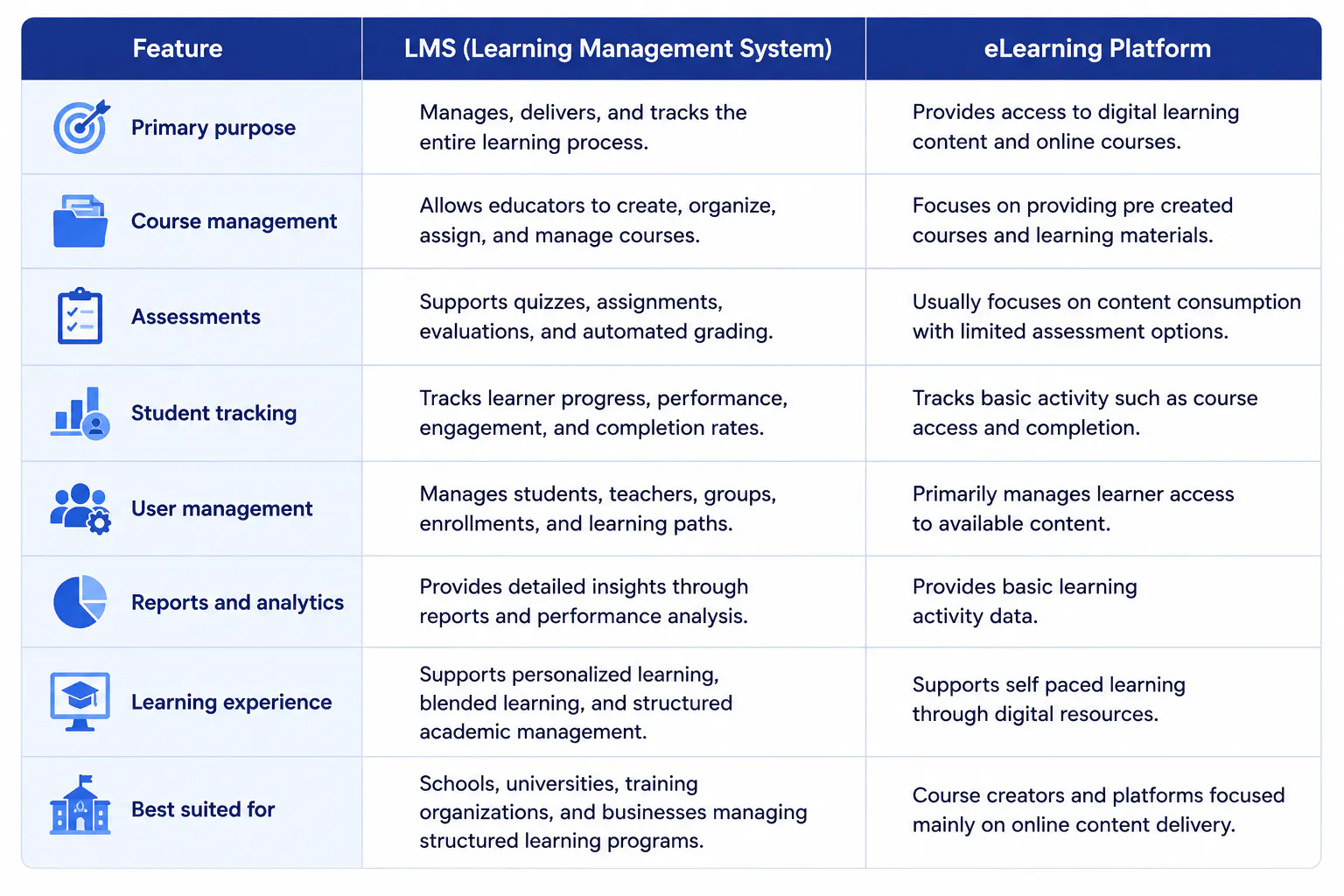
LMS vs eLearning platforms: Key Differences Explained
The main difference between an LMS and an eLearning platform is that an LMS manages the complete learning process, while an eLearning platform mainly focuses on delivering digital learning content and online courses.
Read more: What Is the Difference Between an SIS and an LMS?
Which One to Choose: LMS or eLearning platform?
The choice depends on your learning requirements. An LMS is suitable for institutions that need course management, assessments, tracking, and learner administration, while an eLearning platform works best for simple digital content delivery.
Choose an LMS for:
- Managing courses, students, and learning activities.
- Tracking student progress and performance.
- Creating assessments and generating reports.
- Supporting online and blended learning.
Choose an eLearning platform for:
- Delivering online courses and digital resources.
- Supporting self paced learning.
- Providing access to educational content.
For schools and training organizations, an LMS provides a complete learning ecosystem beyond content delivery.

