
Key takeaways
- Traditional teaching methods struggle to engage today's students because passive lectures and memorisation are less effective than active, interactive learning.
- Student engagement improves when lessons include discussions, collaboration, problem solving, and real world application instead of continuous lectures.
- Technology enhances effective teaching rather than replacing it. Digital learning platforms streamline assessments, feedback, and progress tracking, allowing teachers to focus more on delivering engaging and meaningful learning experiences.
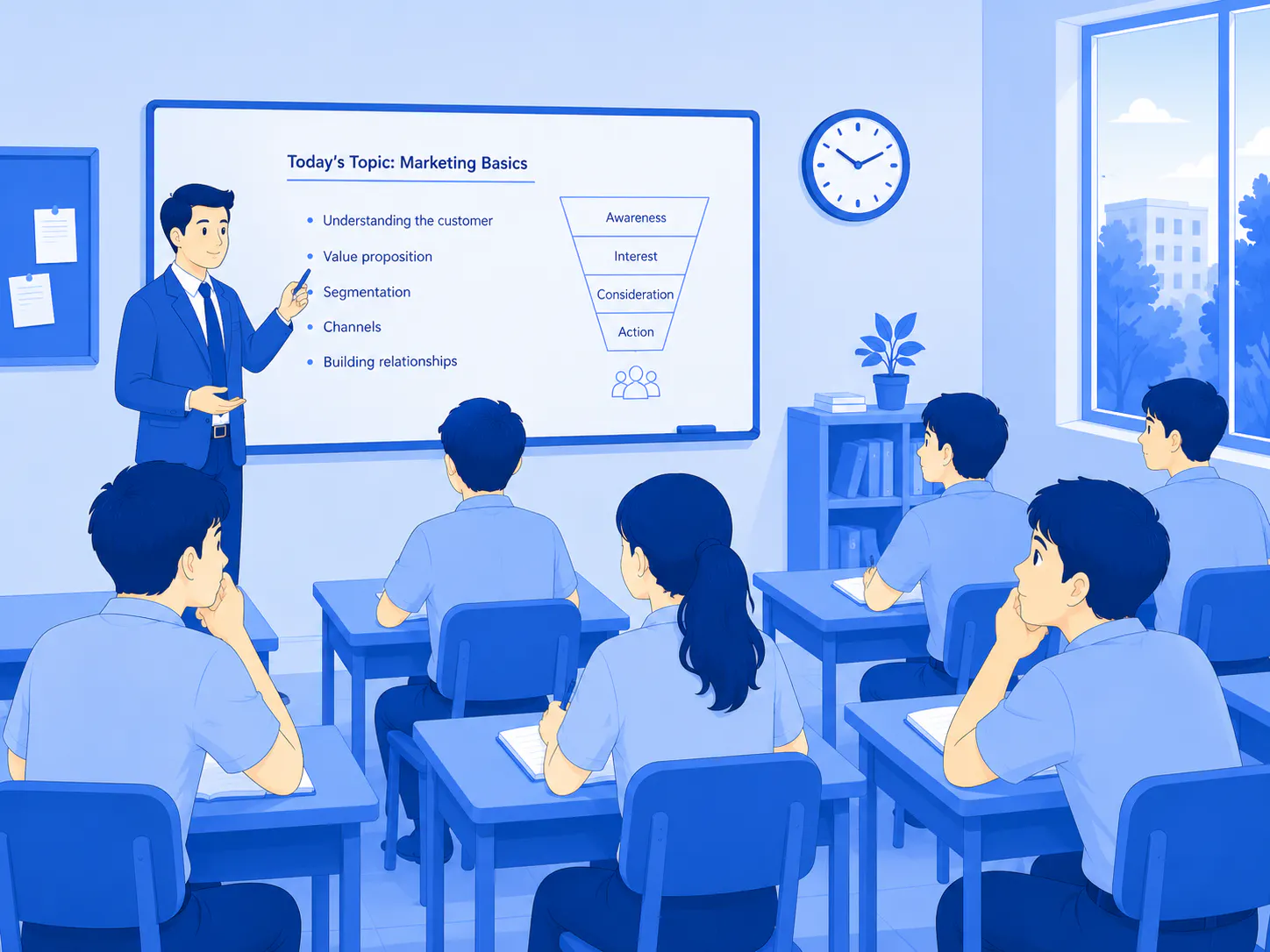
Traditional teaching methods are gradually losing students' attention because they often rely on one way instruction, passive learning, and memorisation rather than active participation. Today's students are accustomed to interactive, personalised, and technology driven learning experiences, making engagement more challenging in conventional classrooms.
A study by learning scientist Manu Kapur found that students who attempted to solve problems before receiving formal instruction outperformed those taught using the traditional lecture first approach. Despite initially struggling, they developed stronger conceptual understanding and were better able to apply what they learned to new situations.
In this blog, we'll explore why traditional teaching methods are becoming less effective for today's learners and how schools can create more engaging classrooms that improve participation, critical thinking, and long term learning outcomes.
Why Student Attention Is Harder to Maintain Today
Student attention isn't measured by a fixed number of minutes. Research shows that focus naturally changes based on age, the learning activity, and how engaging the lesson is.
- A 2023 frontier's study involving 262 participants aged 7 to 85 found that attention spans varied significantly across age groups.
- Young adults maintained attention for an average of 76.24 seconds, while children averaged 29.61 seconds and older adults averaged 67.01 seconds.
- During the same study, children's attention declined by 27.4% as the task progressed, highlighting how quickly engagement can decrease when learning isn't interactive.
- A literature review by Neil A. Bradbury, published in Advances in Physiology Education, found little evidence supporting the commonly quoted 10 to 15 minute attention span.
- The review concluded that student attention naturally fluctuates throughout a lesson and depends on factors such as teaching methods, participation, interest, and lesson design.
Why Traditional Teaching Methods Struggle to Hold Student Attention
Modern education research shows that improving classroom participation is not about making lessons shorter. It is about giving students regular opportunities to think, respond, and apply what they are learning.
Some of the most effective classroom practices include:
Information Overload Reduces Learning
Students can only process a limited amount of new information at one time. Long lectures that introduce multiple concepts without opportunities to reflect, practise, or apply them can overwhelm working memory. Instead of improving understanding, this often leads to lower retention and reduced participation.
Modern teaching addresses this by breaking lessons into smaller learning segments, combining instruction with activities, discussions, and regular knowledge checks that help reinforce understanding.
Read more: What is the Difference Between LMS and Traditional Learning Methods?
Motivation Comes From Participation, Not Just Grades
Traditional classrooms often rely on external motivators such as assignments, grades, and examinations. While these encourage students to complete tasks, they don't always inspire genuine interest in learning.
Students are more likely to stay engaged when they feel involved in the learning process, understand the purpose behind their work, and have opportunities to demonstrate their abilities beyond simply earning marks.
Students Learn Better When They Have a Voice
Learning becomes more meaningful when students are encouraged to ask questions, make decisions, and explore different ways to solve problems. In lecture based classrooms, students often play a passive role, listening rather than participating.
Modern teaching shifts that balance by encouraging classroom discussions, collaborative activities, project based learning, and independent thinking, giving students greater ownership of their education.
Read more: How NEP 2020 Promotes Critical Thinking and Problem Solving?
The Problem Isn't Today's Students
Technology is often blamed for shorter attention spans, but the issue is more complex. Students now spend much of their daily lives interacting with highly engaging digital experiences. Traditional teaching methods, which have changed very little over the years, are now competing for attention in a very different environment.
Rather than expecting students to simply concentrate harder, educators are redesigning lessons to make learning more engaging, interactive, and relevant.
Technology Supports Learning But Does Not Replace Good Teaching
Technology is often viewed as the solution to student engagement, but digital tools alone cannot transform a classroom. The quality of teaching will always remain the most important factor.
What technology can do is remove many of the administrative tasks that take teachers away from teaching. Modern learning platforms make it easier to:
- Deliver quizzes and assessments instantly.
- Monitor student participation and progress in real time.
- Organise learning materials in one place.
- Share timely feedback with students.
- Support different learning styles using videos, documents, quizzes, and interactive activities.
When combined with effective teaching strategies, technology becomes a tool that strengthens learning rather than replacing the teacher. The goal is not to digitise education but to create classrooms where students remain active, involved, and motivated throughout every lesson. An Learning Management Systems for Schools supports this approach by making learning more interactive while simplifying teaching and student progress tracking.
Conclusion
Student engagement is no longer driven by longer lectures or greater amounts of content. Today's learners achieve better outcomes when they actively participate, ask questions, collaborate, and apply knowledge in meaningful ways.
By combining effective teaching practices with the right learning technology, schools can create classrooms that improve participation, strengthen critical thinking, and support long term academic success.

