
Key Takeaways
- An LMS payment system should connect payment collection with pricing, payment plans, billing, transactions, and learner access.
- Payment requirements vary by organization and region, with options such as UPI being particularly relevant for Indian learners.
- LMS platforms differ in their payment capabilities, so organizations should compare gateways, payment models, billing features, and how payments connect with course access.

Payment management is an important part of a Learning Management System (LMS) when schools, colleges, corporate training teams, coaching institutes, and other learning organizations collect payments for courses or learning programs. A suitable LMS payment gateway can connect payment collection with course pricing, payment plans, billing, and learner access.
Payment requirements can vary by organization and region. In India, UPI is widely used for digital payments, while organizations serving learners across different markets may need to consider the payment methods and gateways available to their learners.
In this guide, we compare 5 LMS platforms with payment gateway integration, focusing on payment gateways, payment options, pricing models, payment plans, billing, and payment management. The comparison also looks at how payment functionality fits into the wider learning environment.
What Are the Best LMS Platforms With Payment Gateway Integration?
The five LMS platforms covered in this comparison are LearnWorlds, Quyl, LearnDash, LifterLMS, and Tutor LMS. Each platform takes a different approach to payment management, from integrated payment options to payment gateway integrations within a wider platform ecosystem.
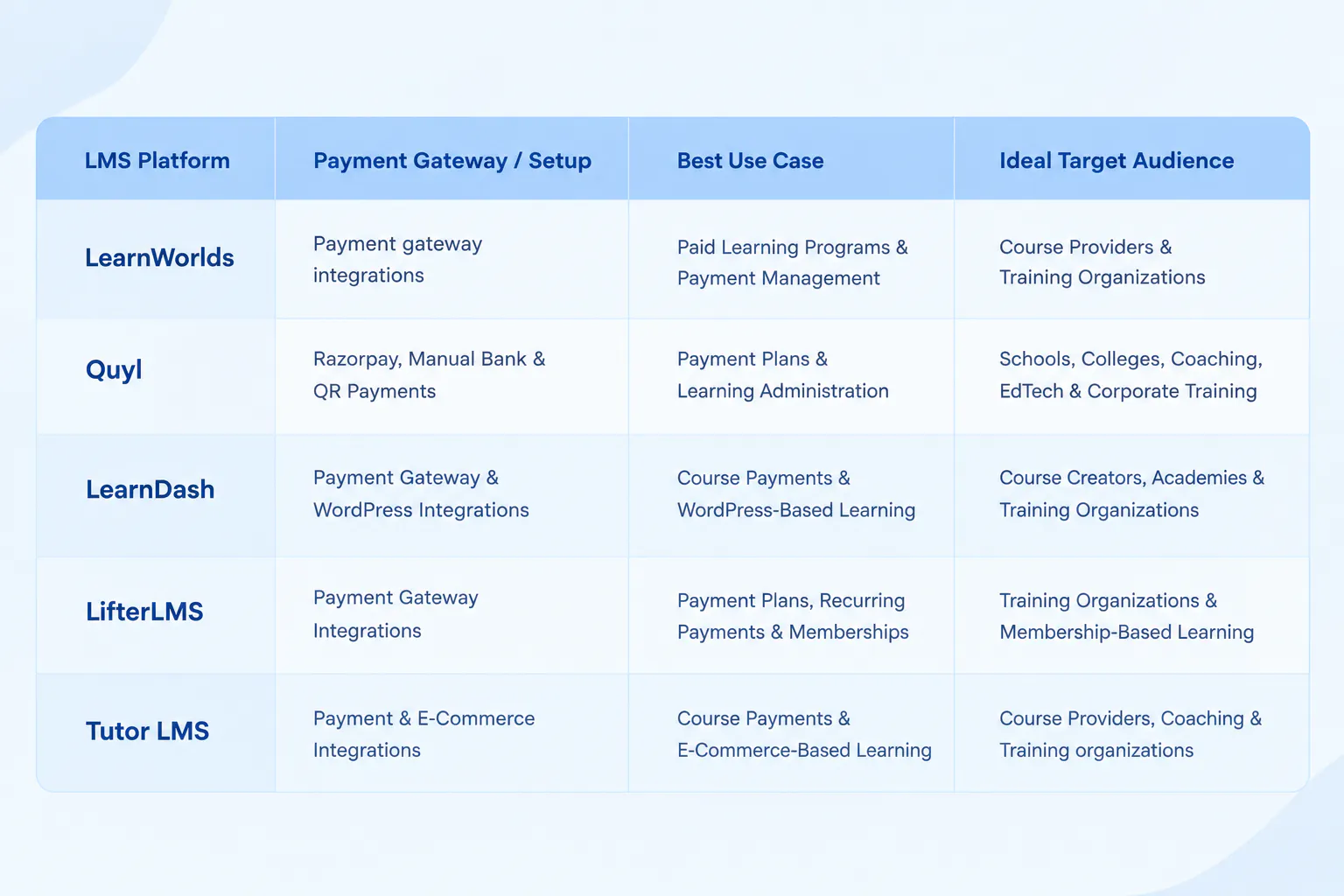
1. LearnWorlds
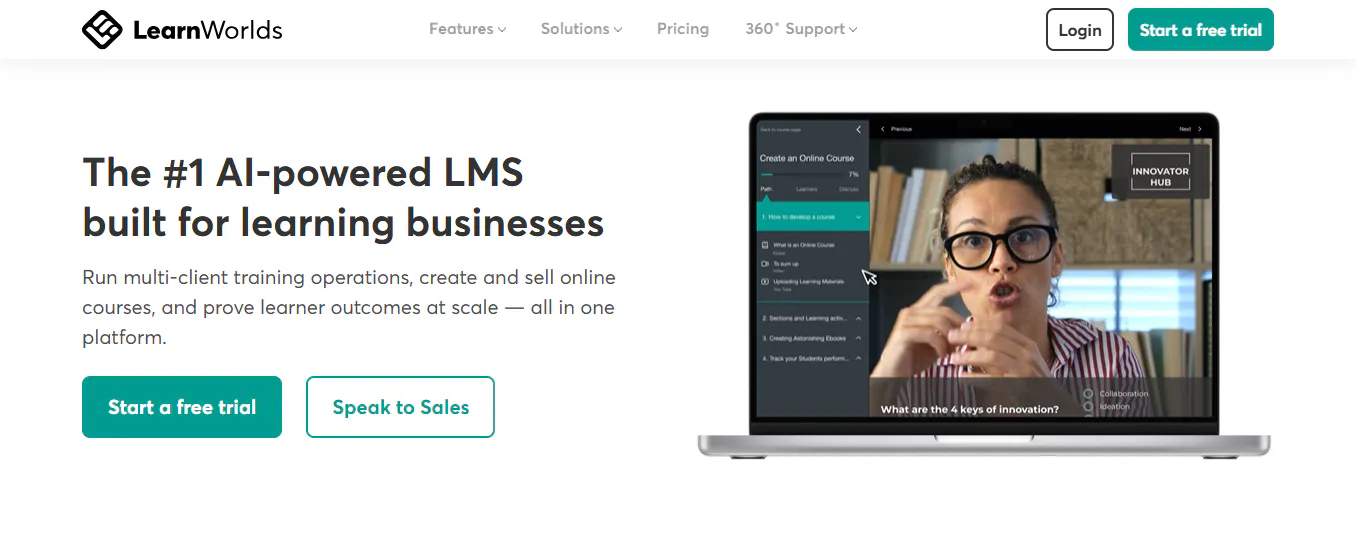
LearnWorlds is a learning management platform that combines course delivery with payment and pricing functionality. It is designed for organizations that need to manage learning programs alongside payment collection and learner access.
Key Features: Payment gateway integration, course payments, pricing options, payment plans, and learner access management.
Best For: Organizations delivering and managing paid online learning programs.
Pros:
- Combines learning management and payment functionality.
- Supports different payment and pricing requirements.
- Provides a hosted learning environment.
Cons:
- May be more suited to organizations focused on paid online learning programs than institutional learning environments.
- Payment requirements should be checked against the gateways and methods available in your target market.
2. Quyl
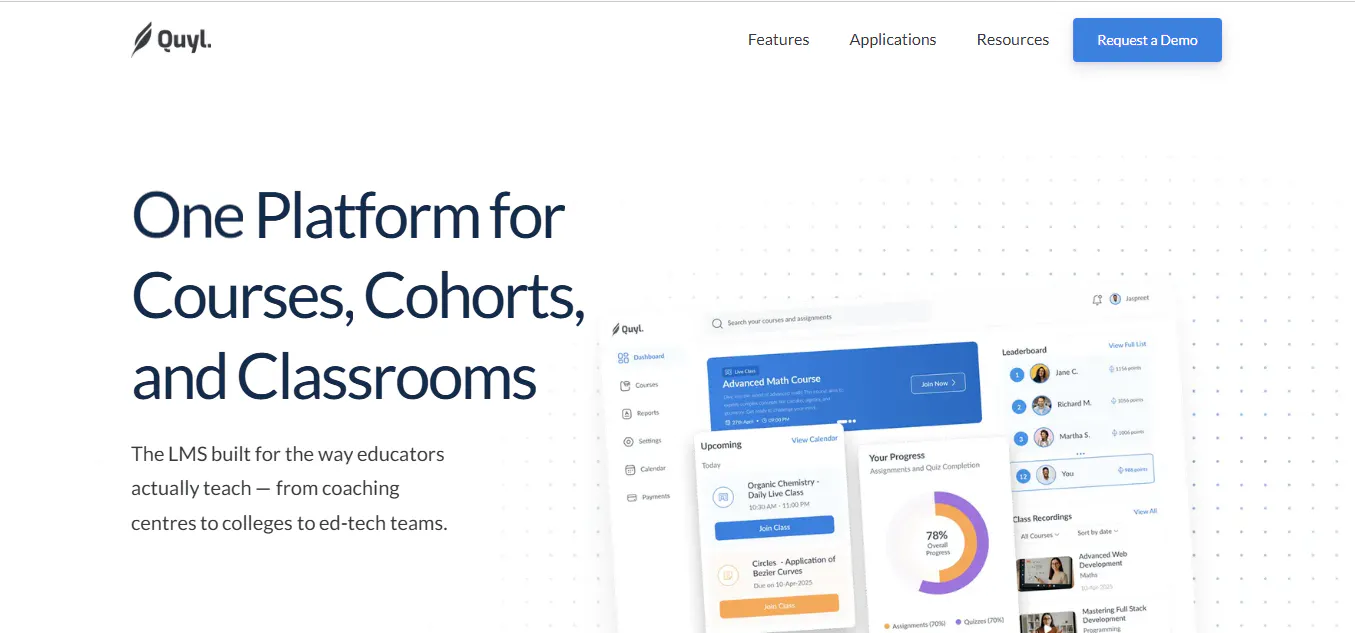
Quyl is a learning management system for schools, colleges, coaching institutes, ed-tech platforms, and corporate training organizations. Its payment functionality connects payment collection with pricing, billing, financial tracking, and learner access within the LMS.
Key Features: Razorpay integration, manual bank and QR payments, free and one-time pricing, installment and choice-based pricing, payment plans, due dates, grace periods, discount codes, course bundles, manual billing, transaction tracking, revenue tracking, overdue balance tracking, and payment-based course access.
Best For: Schools, colleges, coaching institutes, ed-tech platforms, and corporate training organizations that need payment and learning management in one platform.
Pros:
- Supports both online and manual payment methods.
- Offers multiple pricing models, including installment payments.
- Supports payment plans with due dates and grace periods.
- Combines billing, transaction, revenue, and overdue balance tracking.
- Payment status can be connected to course access.
Cons:
- Razorpay is the specified payment gateway integration in the available feature information.
- Organizations requiring a different payment gateway should verify whether it fits their required payment workflow.
3. LearnDash
LearnDash is a WordPress-based LMS that provides payment functionality as part of its wider WordPress ecosystem. Its payment setup can be connected with the tools used to manage course payments and learner access.
Key Features: Payment gateway integration, course payments, payment processing, paid course access, and WordPress integrations.
Best For: Organizations already using WordPress that want to connect learning management with their existing website and payment setup.
Pros:
- Works within the WordPress ecosystem.
- Can be combined with other WordPress tools and integrations.
- Suitable for organizations that want control over their wider website setup.
Cons:
- Payment functionality can depend on the wider WordPress configuration.
- Organizations may need additional integrations to build their preferred payment workflow.
Read more: Open Source vs Cloud LMS: Key Differences Explained
4. LifterLMS
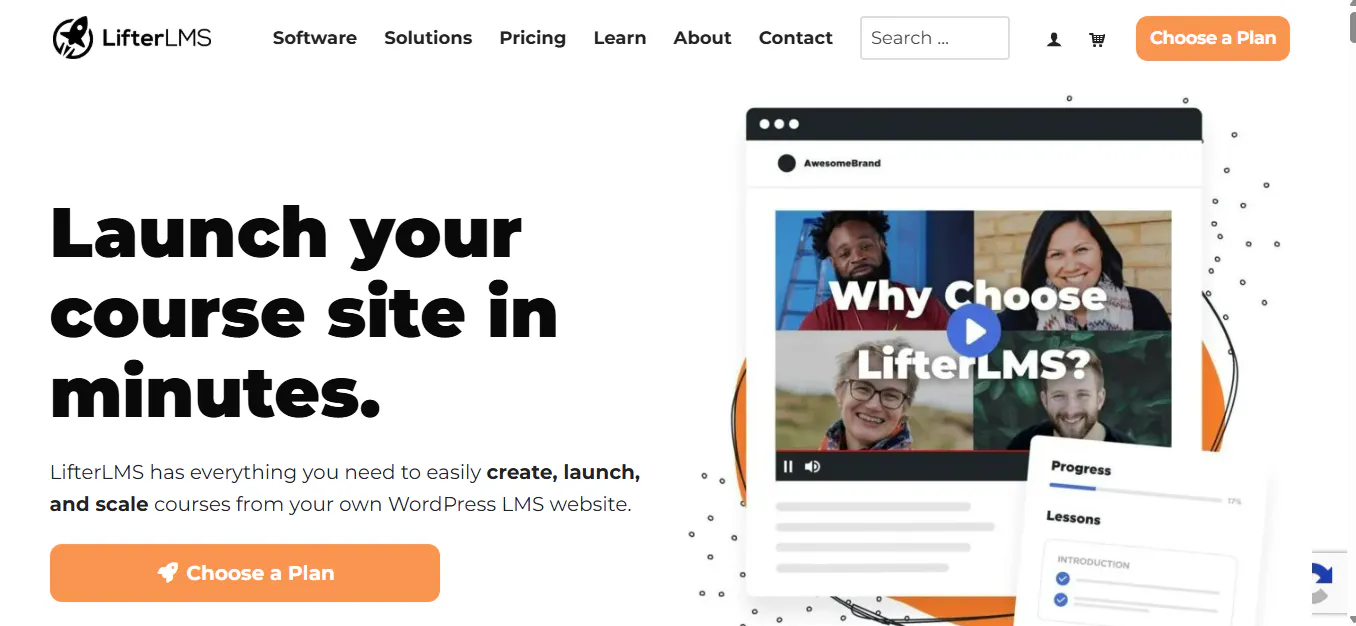
LifterLMS is a WordPress LMS that combines learning management with payment and access options. Its payment functionality supports different ways of structuring access to courses and learning programs.
Key Features: Payment gateway integration, one-time payments, recurring payments, payment plans, course access, and membership payments.
Best For: Organizations using WordPress that need structured payment options for courses, memberships, and recurring learning programs.
Pros:
- Supports different payment models.
- Combines payment functionality with course and membership access.
- Works within the WordPress ecosystem.
Cons:
- Payment setup can depend on the wider WordPress environment.
- The final payment workflow may require additional configuration or integrations.
5. Tutor LMS

Tutor LMS is a WordPress learning management system that connects course delivery with payment and e-commerce functionality through its wider WordPress ecosystem.
Key Features: Payment gateway integration, course pricing, payment processing, paid course access, e-commerce integrations, and learner enrollment.
Best For: Organizations using WordPress that want to combine an LMS with their existing payment and e-commerce setup.
Pros:
- Works with the WordPress ecosystem.
- Can be connected with e-commerce functionality.
- Supports paid learning programs.
Cons:
- Payment capabilities can depend on the connected WordPress and e-commerce setup.
- Additional configuration may be required depending on the payment workflow.
Read more: Headless LMS vs Traditional LMS: Key Differences Explained
Final thoughts
An LMS with payment gateway integration should do more than process payments. It should connect pricing, payment collection, billing, transactions, and learner access within the learning environment. The five platforms covered here take different approaches, from cloud-based LMS platforms to WordPress-based solutions.
For organizations comparing these platforms, the key consideration is how well the payment setup fits the learning model, audience, pricing structure, and administrative requirements. For schools, colleges, coaching institutes, EdTech businesses, and corporate training teams, these factors can make a significant difference in how payments and learning operations are managed together.

