
Key Takeaways
- The main difference between asynchronous and synchronous learning is timing: asynchronous learning allows students to learn at flexible times, while synchronous learning takes place at scheduled times with real-time interaction.
- Synchronous learning supports immediate feedback, live discussions, collaboration, and direct teacher support, while asynchronous learning provides flexibility, self-paced learning, and easy content revision.
- Schools can combine both approaches through blended learning, using an LMS to connect Live Classes, digital content, assessments, assignments, and student progress.

The main difference between asynchronous and synchronous learning is the timing of instruction and interaction. Asynchronous learning allows students to access lessons and complete activities at flexible times, while synchronous learning brings teachers and students together for scheduled, real-time sessions.
Both approaches support digital learning but create different learning experiences. Schools can use asynchronous learning for self-paced study and revision, while synchronous learning can support live discussions, immediate feedback, and collaborative activities.
In this blog, we compare asynchronous and synchronous learning, their key differences, benefits, limitations, and how an school LMS can support both approaches through a connected learning environment.
What Is Synchronous Learning?
Synchronous learning is a learning approach where teachers and students participate in lessons at the same time through live, real-time instruction. Schools can deliver synchronous learning through physical classrooms or digital platforms that support live classes, video sessions, discussions, and interactive activities.
What Are the Key Components of Synchronous Learning?
Several components create the real-time learning experience:
- Live Instruction – Teachers deliver lessons while students participate during the scheduled session.
- Real-Time Communication – Students ask questions and teachers provide immediate responses.
- Interactive Activities – Teachers use discussions, polls, quizzes, and collaborative tasks during lessons.
- Teacher Guidance – Teachers explain concepts, address doubts, and adjust instruction based on student responses.
- Scheduled Sessions – Schools organise classes around fixed dates and times.
- Digital Collaboration – Students work together through virtual classrooms, shared resources, and discussion tools.
Why Do Schools Use Synchronous Learning?
Synchronous learning works well when students need direct teacher guidance, immediate feedback, or collaborative classroom activities. Live sessions also give teachers an opportunity to observe student participation and respond to learning needs during the lesson.
What Are the Benefits of Synchronous Learning?
- Improves Real Time Interaction – Students communicate directly with teachers and classmates.
- Provides Immediate Feedback – Teachers clarify misunderstandings during the lesson.
- Encourages Collaboration – Students participate in discussions, group activities, and problem solving.
- Creates Learning Structure – Fixed sessions give students a consistent learning routine.
- Strengthens Student Connection – Regular interaction helps students build stronger classroom relationships.
- Supports Active Learning – Teachers can use live activities to make students participate rather than only receive information.
Read more: What is Active Learning?
What Are the Disadvantages of Synchronous Learning?
- Limits Schedule Flexibility – Students need to attend classes at predetermined times.
- Depends on Technology – Internet, device, audio, and power issues can interrupt live sessions.
- Requires Attendance – Students can miss important explanations when they cannot join a session.
- Limits Self Paced Learning – Students generally follow the pace of the live lesson.
- Requires Teacher Preparation – Teachers need to prepare content and activities for each live session.
Can Schools Combine Synchronous and Asynchronous Learning?
Yes. Schools can combine synchronous and asynchronous learning through a blended learning model. Teachers can use asynchronous resources for self-paced study and use live classes for discussions, doubt clarification, collaborative activities, and topics that require direct instruction.
An LMS can support both approaches by organising digital courses, assignments, assessments, progress tracking, and Live Classes within one learning environment.
What Is Asynchronous Learning?
Asynchronous learning is a learning approach where students access lessons and complete learning activities at different times instead of attending a live session. Schools can provide recorded lessons, digital resources, assignments, quizzes, and discussion forums through an LMS.
What Are the Key Components of Asynchronous Learning?
- On Demand Content – Students access learning materials whenever they need them.
- Self Paced Activities – Students complete lessons and assignments according to their own pace.
- Digital Resources – Teachers provide videos, presentations, documents, and other learning materials.
- Online Assessments – Students complete quizzes, assignments, and other assessments digitally.
- Teacher Feedback – Teachers review student work and provide feedback through digital platforms.
- Progress Tracking – Schools monitor learning activity, completion, and assessment performance.
Why Do Schools Use Asynchronous Learning?
Asynchronous learning works well when students need flexible access to lessons, revision resources, or independent practice. The approach allows students to revisit content and complete learning activities without depending on a fixed class schedule.
What Are the Benefits of Asynchronous Learning?
- Provides Flexible Learning – Students choose suitable times for study.
- Supports Self-Paced Learning – Students control the speed of their learning.
- Enables Easy Revision – Students revisit recorded lessons and resources when needed.
- Supports Different Learning Speeds – Students spend additional time on difficult topics.
- Extends Learning Beyond Class Hours – Students continue learning outside scheduled lessons.
Read more: 10 Modern Teaching Methods Transforming K-12 Education
What Are the Disadvantages of Asynchronous Learning?
- Requires Self-Discipline – Students need to manage their own learning schedule.
- Delays Teacher Feedback – Students may need to wait for responses to questions or assignments.
- Reduces Real-Time Interaction – Students have fewer opportunities for immediate discussion.
- Can Affect Engagement – Some students may lose motivation during independent learning.
- Requires Progress Monitoring – Teachers need to track student activity and performance closely.
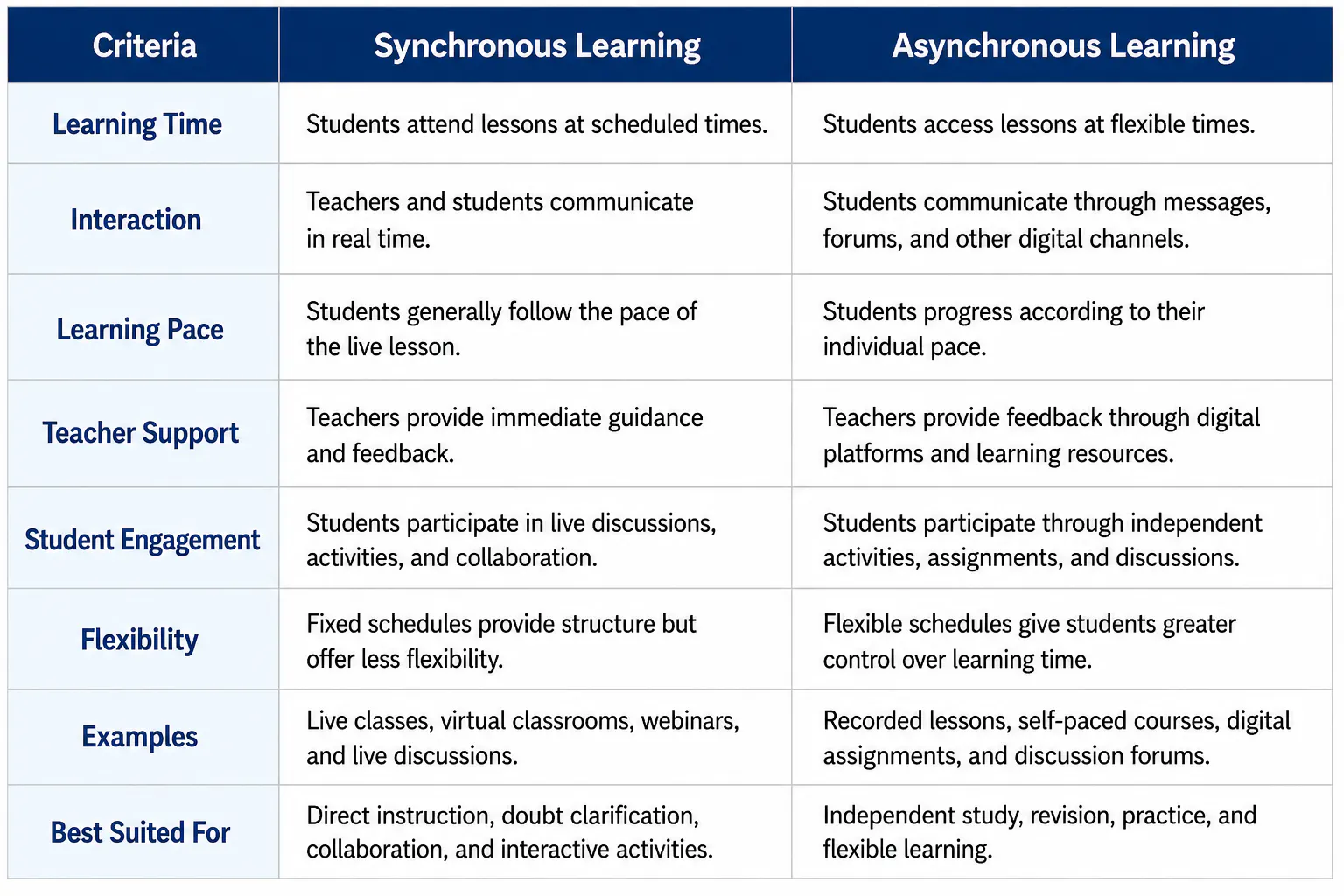
Synchronous Learning vs Asynchronous Learning: Key Differences
The main difference between synchronous and asynchronous learning is that synchronous learning happens at a scheduled time with real-time interaction, while asynchronous learning allows students to learn at flexible times without attending a live session.
Connect Live and Self-Paced Learning with Quyl LMS
Quyl helps schools deliver blended learning by combining synchronous and asynchronous learning in one connected platform. Teachers can use Live Classes for real-time instruction, discussions, and doubt clarification, while students can access courses, learning resources, assignments, and quizzes at their own pace.
Quyl also helps schools track student progress, organise schedules, and manage learning activities, giving schools a flexible way to deliver blended learning across different learning needs.

