
Key takeaways
- An LMS improves student engagement by making learning interactive, personalized, collaborative, and accessible beyond the traditional classroom.
- Features such as multimedia lessons, instant feedback, gamification, and mobile learning encourage continuous participation and improve learning outcomes.
- Real time analytics and progress tracking help teachers identify struggling students early and provide timely, personalized support.
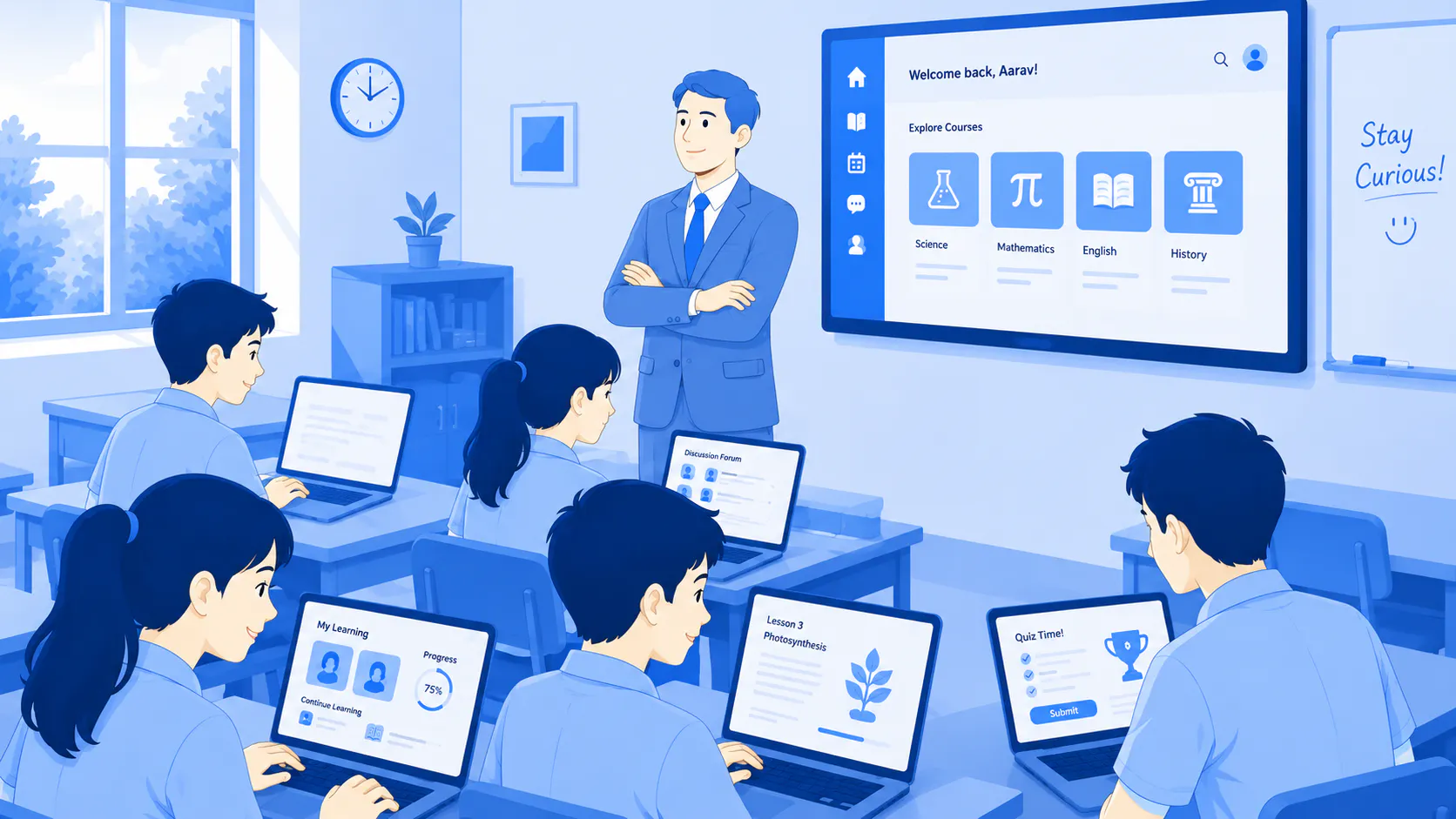
Being a teacher, keeping students engaged throughout a classroom session is one of the biggest challenges in education today. Every student learns differently, attention spans vary, and digital distractions make it even harder to encourage active participation. Whether the classroom is physical, hybrid, or fully online, simply delivering lessons is no longer enough to keep students involved.
A School Learning Management System (LMS) helps educators move beyond traditional teaching by creating a more interactive and structured learning experience. From quizzes and assignments to personalized learning paths, live classes, instant feedback, and progress tracking, an LMS gives students more opportunities to participate and stay engaged throughout the learning process.
In this blog, we'll explore how an LMS improves student participation in classrooms and why it has become an essential tool for creating more engaging and effective learning experiences.
1. Interactive Learning That Keeps Students Involved
Students are more likely to participate when lessons go beyond textbooks and static presentations. A modern LMS allows teachers to combine videos, interactive quizzes, presentations, simulations, and multimedia resources into a single lesson, making learning more engaging and easier to understand.
Instead of waiting until the end of a chapter to assess understanding, teachers can include activities throughout the lesson. Students answer questions, complete short assessments, and receive immediate feedback, turning learning into an active experience rather than passive listening.
An interactive LMS helps students:
- Engage with multimedia lessons.
- Participate in quizzes during class.
- Learn through different content formats.
- Stay focused with varied learning activities.
2. Personalized Learning That Supports Every Student
Every classroom contains students who learn at different speeds. Some quickly grasp new concepts, while others benefit from additional explanations or practice. An LMS allows teachers to create personalized learning experiences without managing separate classrooms.
Students can revisit lessons, complete activities at their own pace, and follow learning paths designed around their individual needs. Teachers can also organize students into cohorts and assign different resources based on ability, helping every learner stay engaged without feeling left behind.
Personalized learning allows schools to:
- Create individual learning paths.
- Support self paced learning.
- Assign different activities to different groups.
- Improve participation across varying skill levels.
Read more: What Is Cohort-Based Learning (CBL)?
3. Collaboration Beyond the Classroom
Participation doesn't have to stop when the lesson ends. An Learning platform creates opportunities for students to continue learning together through discussions, collaborative assignments, shared resources, and ongoing communication with teachers.
Students who may be reluctant to participate during classroom discussions often feel more comfortable asking questions or sharing ideas in a digital environment.
Collaboration features encourage students to:
- Participate in classroom discussions.
- Work together on projects.
- Share ideas with classmates.
- Ask questions outside lesson hours.
4. Instant Feedback That Encourages Continuous Improvement
Students stay motivated when they know how they're performing. Instead of waiting days or weeks for results, an learning platform provides immediate feedback through quizzes, assessments, and digital assignments.
Teachers can also provide personalized comments, helping students understand where they performed well and where they need improvement. Continuous feedback keeps students engaged because they can immediately act on suggestions rather than waiting until the next assessment.
5. Mobile Learning Removes Barriers to Participation
Learning should not be restricted to a classroom or desktop computer. A mobile friendly LMS gives students the flexibility to continue learning wherever they are, making participation much easier.
Whether reviewing notes before class, completing assignments while travelling, or checking announcements from home, students remain connected to their learning without interruption.
Mobile accessibility allows students to:
- Access lessons anytime.
- Submit assignments on any device.
- Receive deadline reminders.
- Continue learning outside school hours.
6. Progress Tracking Motivates Students to Stay Engaged
When students can clearly see how much they've completed, they become more accountable for their own learning. Progress indicators, completed modules, upcoming tasks, and assessment results help learners stay focused on achieving their goals.
Instead of wondering what to do next, students always know where they are in their learning journey, encouraging consistent participation throughout the course.
7. Smart Insights Help Teachers Support Students Earlier
Student participation often declines before academic performance does. A modern LMS gives teachers real time insights into attendance, assignment completion, quiz performance, and overall engagement, helping them identify concerns before they become larger problems.
With these insights, teachers can provide additional support, adjust learning materials, or communicate with students and parents earlier, creating a more proactive approach to student success.
Educators can quickly identify:
- Students missing assignments.
- Low participation levels.
- Declining engagement.
- Learners who may need additional support.
8. Gamification That Motivates Participation
Participation increases when learning feels rewarding rather than repetitive. Modern LMS platforms introduce gamification elements that encourage students to stay active throughout the course. Progress indicators, achievement badges, points, certificates, and learning milestones give students visible goals to work towards.
Instead of completing assignments simply because they're required, students become motivated by seeing their progress and celebrating small achievements along the way. This creates healthy competition while making learning more enjoyable.
Gamification helps students:
- Stay motivated throughout the course.
- Participate consistently in learning activities.
- Celebrate achievements and milestones.
- Build confidence through visible progress.
- Develop better learning habits.
Conclusion
Student engagement grows when learners actively participate rather than passively consume information. An LMS for schools supports this shift by making learning interactive, personalised, collaborative, and accessible from anywhere.
With features such as multimedia lessons, instant feedback, gamification, mobile learning, and real time analytics, schools can create more engaging learning environments while giving educators the insights needed to support every student's progress and success.

