
Key Takeaways
- Tovuti alternatives differ in their focus, from enterprise and extended-enterprise training to academic learning and online course businesses.
- Docebo, Absorb LMS, LearnUpon, Quyl, Intellum, TalentLMS, and LearnWorlds offer different combinations of course management, assessments, analytics, integrations, branding, and learner management.
- Organizations should compare alternatives based on learning model, audience, budget, administration, integrations, scalability, and required LMS capabilities.

Tovuti is built for organizations that need more than basic course delivery, with tools for interactive content, learning paths, assessments, certifications, branding, and learner management. But a feature-rich LMS is not automatically the right fit for every team.
For some organizations, the main concerns are cost, setup effort, administrative complexity, and whether the platform matches their size and learning model. These factors can make other LMS platforms worth considering.
In this guide, we compare seven Tovuti LMS alternatives in 2026, looking at their features, strengths, limitations, and the types of organizations they suit best.
Why Consider A Tovuti LMS Alternative?
Organizations may consider alternatives to Tovuti when:
- Cost Does Not Match The Budget: Tovuti’s pricing may be difficult to justify for smaller organizations or teams with straightforward training requirements.
- The Platform Offers More Than Needed: Its broad range of learning and administration tools may be unnecessary for organizations looking for a focused LMS.
- Administration Requires More Effort: Setting up courses, users, learning paths, and other platform components can take time, particularly for new administrators.
- The Learning Model Is Different: Organizations with academic, school-based, or highly specialized training workflows may need capabilities that align more closely with their specific model.
- Integration Requirements Vary: Organizations may need to assess whether Tovuti connects effectively with their existing business, learning, or productivity systems.
Top 7 Tovuti LMS Alternatives In 2026
The LMS market includes platforms built for different learning models, audiences, and organizational requirements. The alternatives below cover enterprise training, extended-audience learning, academic education, and online course delivery, with differences in features, administration, integrations, and implementation.
1. Docebo
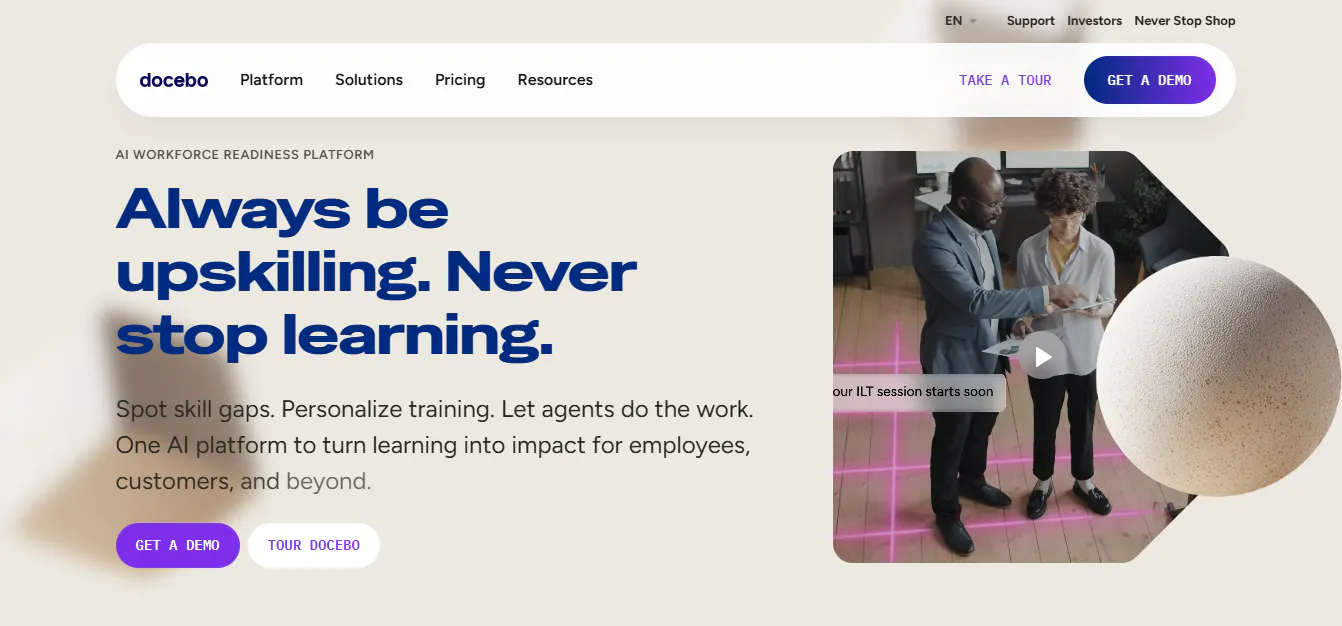
Docebo is an enterprise learning platform designed for organizations managing large-scale employee, customer, partner, and extended-enterprise learning programs. It combines learning management with AI, personalization, analytics, automation, and integrations.
Key Features And Benefits
- AI-Powered Learning: Use AI capabilities for content creation and learning experiences.
- Course Management: Create, organize, and deliver digital learning programs.
- Personalized Learning: Recommend relevant learning based on learner activity and needs.
- Learning Analytics: Monitor participation, completion, and performance.
- Automation: Automate selected learning administration workflows.
- Extended Enterprise Learning: Support employee, customer, partner, and external training.
- Integrations: Connect learning with business and enterprise systems.
- Mobile Learning: Provide access across devices.
Pros
- Strong enterprise scalability.
- Advanced AI and personalization capabilities.
- Supports multiple learner audiences.
- Broad integration capabilities.
- Strong fit for extended-enterprise learning.
Cons
- Enterprise functionality can require significant implementation effort.
- Advanced features may require training and configuration.
- Smaller organizations may not need its full feature set.
- Pricing is generally customized rather than publicly listed.
Best For: Large organizations that need enterprise learning, AI, personalization, analytics, automation, and extended-audience training.
Read more: 8 Best Moodle Alternatives and Competitors to Try in 2026
2. Absorb LMS
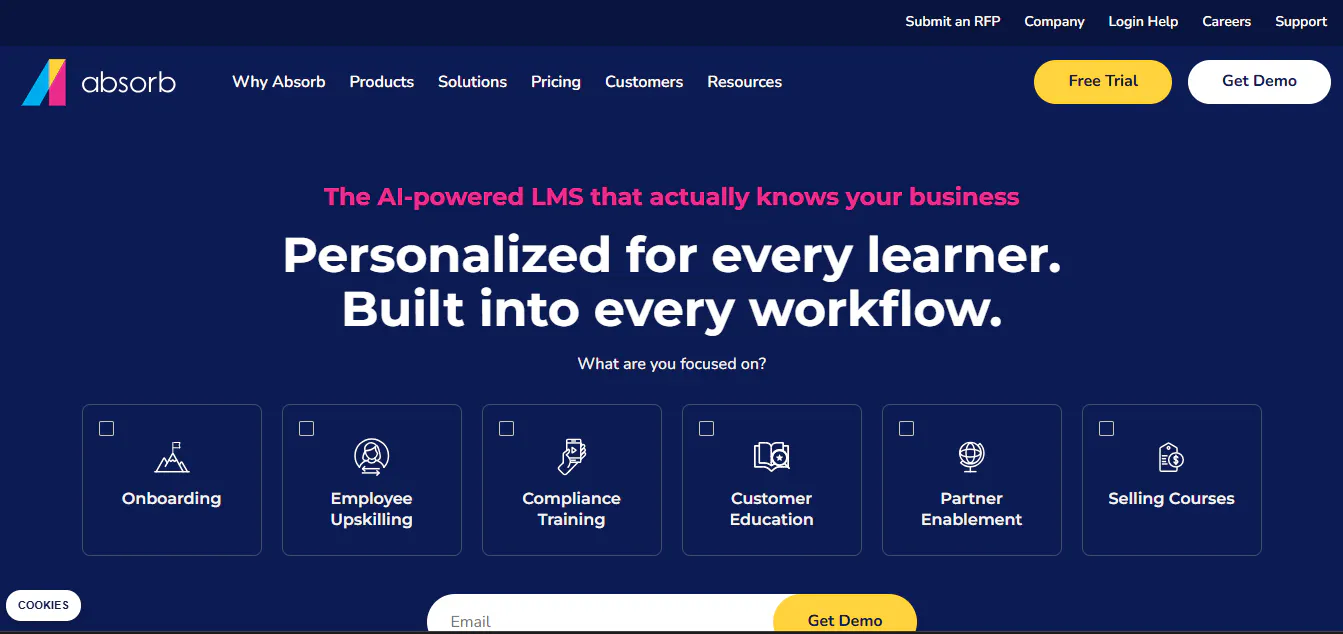
Absorb LMS is a cloud-based learning platform designed for employee training, customer education, partner learning, and other external programs. It combines course management, content creation, reporting, mobile learning, and e-commerce.
Key Features And Benefits
- Course Creation: Build and manage digital learning content.
- Learning Management: Manage courses, learners, enrollments, and training programs.
- AI Capabilities: Support content creation and learning administration with AI tools.
- Learning Paths: Structure courses into organized learning programs.
- Reporting & Analytics: Monitor completion, participation, and learning performance.
- Mobile Learning: Support training across devices.
- E-Commerce: Sell courses and manage external learning programs.
- Integrations: Connect with business and learning systems.
- Multi-Audience Learning: Manage different learner populations.
Pros
- Supports internal and external learning.
- Strong fit for multiple learner audiences.
- Includes content creation and AI capabilities.
- Provides reporting and integration options.
- Supports e-commerce for training providers.
Cons
- Advanced functionality can require configuration.
- Implementation requirements vary by organization.
- Smaller organizations may not need its broader capabilities.
- Pricing and packaging can depend on requirements.
Best For: Organizations that need one platform for employee, customer, partner, or external learning.
3. LearnUpon
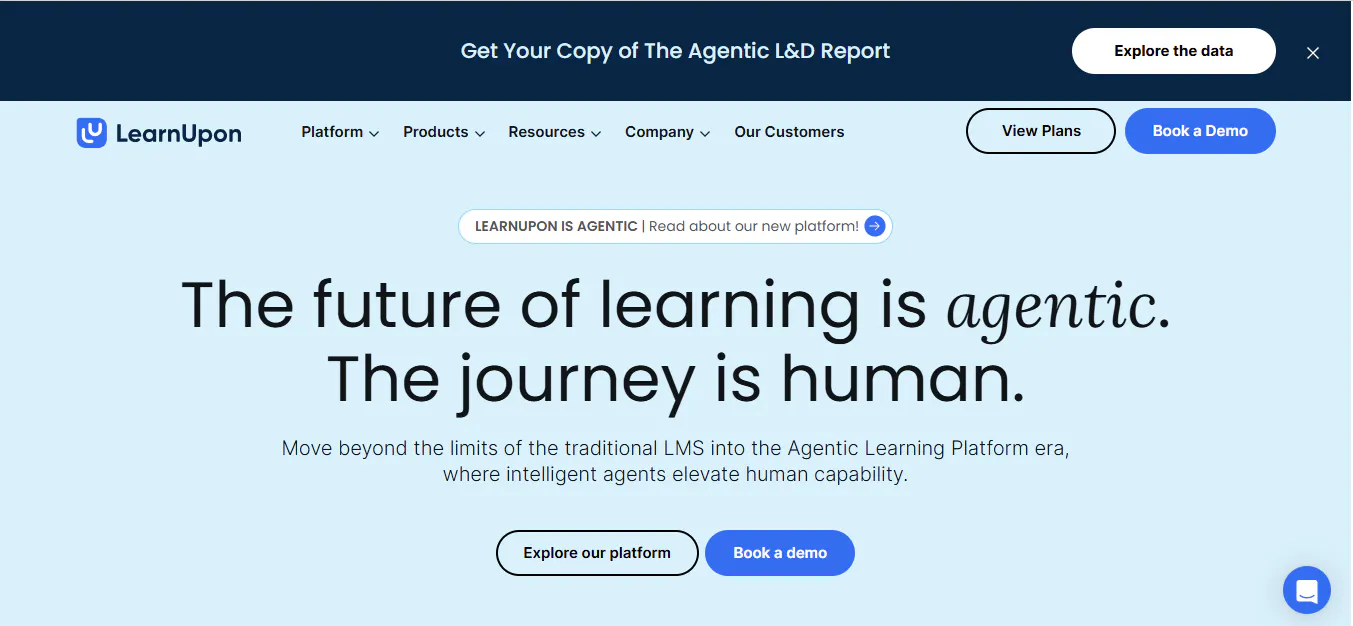
LearnUpon is a cloud-based LMS designed for organizations delivering employee, customer, partner, and other forms of professional training. It focuses on course administration, learner management, reporting, and extended enterprise learning.
Key Features And Benefits
- Course Management: Create and deliver online training programs.
- Learning Paths: Organize courses into structured learning journeys.
- Assessments: Create tests and evaluate learner performance.
- Certifications: Manage certifications and completion requirements.
- Reporting: Track learner progress, completion, and training activity.
- Multi-Audience Learning: Create separate learning experiences for different audiences.
- Integrations: Connect with business applications and external systems.
- Mobile Learning: Provide access to training across devices.
- E-Commerce: Support paid training programs and external learners.
Pros
- Strong fit for extended enterprise learning.
- Straightforward course and learner administration.
- Supports certifications and learning paths.
- Provides reporting and integrations.
- Suitable for organizations serving multiple audiences.
Cons
- Advanced requirements may require additional configuration.
- Institutions looking for deep academic workflows may need a more education-focused LMS.
- Some enterprise requirements can increase implementation effort.
- Highly specialized learning environments may require additional systems.
Best For: Organizations delivering employee, customer, partner, or professional training through a centralized LMS.
Read more: 6 Best Canvas Alternatives for Education Institutions (2026)
4. Quyl
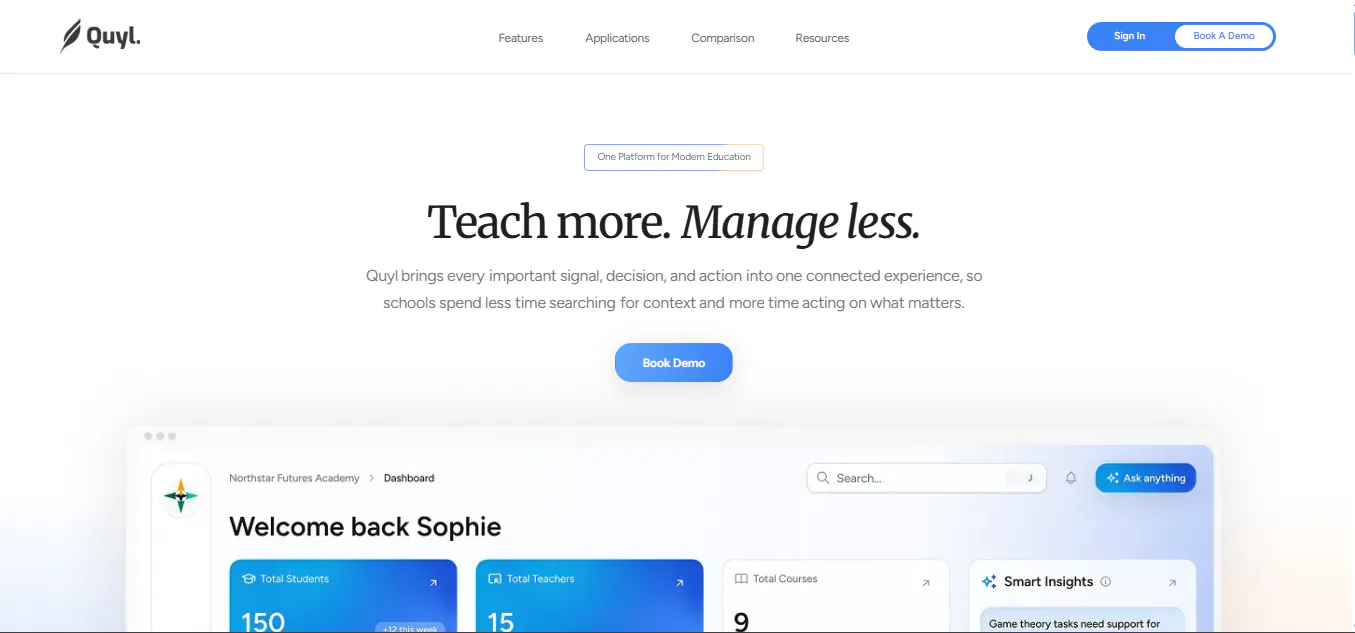
Quyl is a Tovuti LMS alternative for schools and structured learning providers that need course delivery alongside academic and administrative operations. It brings courses, assessments, cohorts, learner management, attendance, payments, reporting, and AI-supported workflows into one role-based environment.
Key Features And Benefits
- Role-Based Workspaces: Provide separate Admin, Teacher, and Student experiences.
- Course Creation & Publishing: Create, organize, preview, publish, and manage courses.
- Curriculum & Multimedia Authoring: Build structured chapters using rich text, files, hosted videos, YouTube/Vimeo content, quizzes, and assignments.
- Cohorts & Group Enrollment: Organize learners into groups and assign courses or bundles.
- Learner Management: Manage learner profiles, enrollment, activation, and learning context.
- Assignments & Grading: Review submissions, award marks, provide comments, and annotate PDFs.
- Quizzes & Question Bank: Create timed quizzes and reusable questions.
- Progress Tracking & Reports: Monitor learner, course, cohort, and academic performance.
- Live-Class Scheduling: Schedule classes and events with meeting links, reminders, and timezone support.
- Attendance Tracking: Record attendance and export reports.
- Payments & Access Rules: Manage payments, installments, due dates, and payment-based access.
- AI-Assisted Content Creation: Generate course cover images and draft or refine rich text.
- Quyl Assistant: Provide contextual, read-only AI assistance across supported platform information.
- Smart Insights: Surface evidence-linked insights about strengths, risks, weak areas, and trends.
- API & Branding: Configure institutional branding and provide scoped external API access.
Pros
- Combines learning and academic operations in one platform.
- Supports Admin, Teacher, and Student workflows.
- Includes cohorts, assessments, attendance, payments, and reporting.
- Provides AI-assisted content creation and contextual AI assistance.
- Supports institutional branding and API access.
Cons
- Integration fit should be assessed against existing institutional systems.
- Specialized external workflows may require additional integration planning.
Best For: Schools and structured learning providers that need courses, assessments, cohorts, learner management, attendance, payments, reporting, and AI-supported workflows in one platform.
5. Intellum
Intellum is a learning platform focused on employee, customer, partner, and professional education. It combines course authoring, learning management, certifications, analytics, and audience-specific learning experiences.
Key Features And Benefits
- Course Authoring: Create and organize digital learning content.
- Learning Management: Manage courses, users, enrollments, and learning programs.
- Certifications: Create and manage certification programs.
- Audience Management: Deliver learning to employees, customers, partners, and other groups.
- Analytics: Monitor participation, completion, and learning activity.
- AI Capabilities: Support selected content and administrative workflows with AI.
- Integrations: Connect learning with other business systems.
- Content Management: Organize learning resources for different audiences.
Pros
- Strong customer and partner education capabilities.
- Supports multiple learner audiences.
- Combines authoring, certifications, and analytics.
- Suitable for professional education programs.
- Enterprise-oriented learning management.
Cons
- Advanced workflows can require administrator configuration.
- Enterprise deployments may require implementation support.
- Organizations with straightforward training needs may not need its broader capabilities.
- Reporting and integrations should be evaluated against specific requirements.
Best For: Organizations delivering employee, customer, partner, and professional education programs.
Read more: 4 Google Classroom Alternatives to Improve Online Learning in 2026
6. TalentLMS
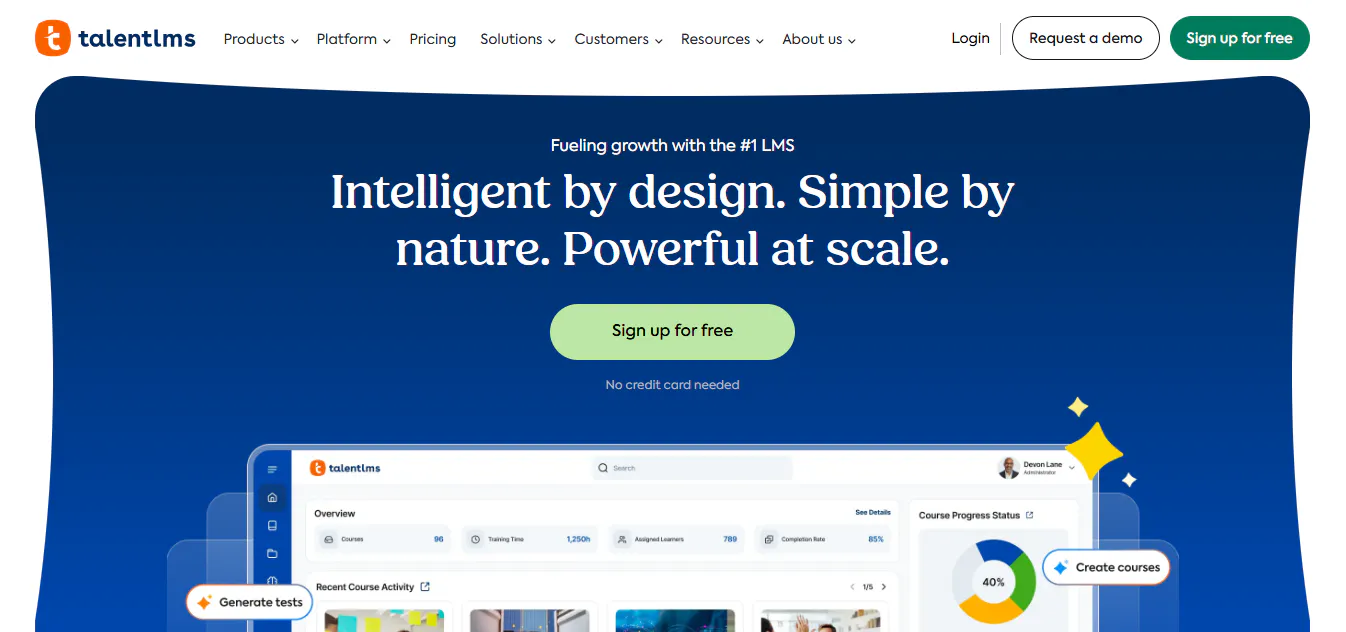
TalentLMS is a cloud-based LMS focused on straightforward course creation, training administration, learner engagement, and rapid deployment. It is commonly suited to organizations that want a relatively simple way to manage training.
Key Features And Benefits
- Course Creation: Build and organize online training.
- Assessments: Create quizzes and evaluate learner performance.
- Learning Paths: Structure training into defined sequences.
- AI-Assisted Authoring: Use AI-supported tools for content creation.
- Mobile Learning: Provide access to training across devices.
- Gamification: Use points, badges, and other engagement features.
- Reporting: Track completion, scores, certifications, and activity.
- Certifications: Manage training certification requirements.
- Integrations: Connect with external business and productivity tools.
Pros
- Relatively quick to deploy.
- Straightforward interface.
- Supports mobile learning and gamification.
- Includes reporting and certification features.
- Suitable for small and mid-sized training programs.
Cons
- May not provide the academic depth required by universities.
- Advanced workflows can require additional configuration.
- Less suited to complex institutional academic administration.
- Larger organizations may need more extensive enterprise capabilities.
Best For: Small and mid-sized organizations looking for a straightforward LMS for employee training, onboarding, compliance, and professional development.
Read more: Top 5 LMS Platform With Payment Gateway Integration
7. LearnWorlds
LearnWorlds is a learning platform designed around online course creation, digital education, learner engagement, and selling educational content. It is particularly focused on organizations and educators building branded learning experiences.
Key Features And Benefits
- Course Creation: Build structured online courses and learning programs.
- Interactive Learning: Add interactive elements to digital course content.
- Assessments: Create quizzes and other learning activities.
- Learning Paths: Organize courses into structured learning experiences.
- Video Learning: Build learning experiences around video content.
- Website & Branding: Create branded learning environments.
- E-Commerce: Sell courses and manage online education products.
- Analytics: Monitor learner engagement and course performance.
- Mobile Learning: Support learners across devices.
- Integrations: Connect with external tools and services.
Pros
- Strong course creation capabilities.
- Suitable for selling online education.
- Provides branding and website tools.
- Supports interactive and video-based learning.
- Useful for educators and training businesses.
Cons
- More focused on online education businesses than traditional academic administration.
- Institutions with complex academic workflows may require additional systems.
- Advanced requirements can require configuration or integrations.
- Its e-commerce orientation may be unnecessary for institutions that do not sell courses.
Best For: Educators, training businesses, and organizations that want to create, brand, market, and sell online courses.
Conclusion
Tovuti alternatives cover a range of learning requirements, from enterprise training and extended-audience learning to online course creation and structured academic learning.
Docebo, Absorb LMS, LearnUpon, and Intellum focus on organizations managing employee, customer, partner, or professional education, while TalentLMS and LearnWorlds address more focused training and online education needs. Quyl brings courses, assessments, cohorts, learner management, attendance, payments, reporting, and AI-supported workflows together for schools and structured learning providers.

