
Key Takeaways
- An LMS with API integration connects learning platforms with external applications, websites, and business systems to exchange data and automate workflows.
- The five best LMS platforms with API capabilities are TalentLMS, Docebo, Moodle, Quyl, and Absorb LMS.
- Choose an LMS based on API endpoints, authentication and security, integration flexibility, developer documentation, and pricing.

An LMS with API integration enables organisations to connect their learning management system with external applications, websites and existing business software. The top five LMS platforms with API capabilities worth considering are Moodle, TalentLMS, Docebo, Quyl, and Absorb LMS.
Today, learning management systems do more than host courses and deliver training. Schools, colleges, coaching institutes and businesses often need to connect their LMS with websites, payment systems, student databases, HRMS and other applications. API capabilities help make these connections possible and allow organisations to build workflows around their existing technology.
We have put together this comparison of five LMS platforms, looking at their API features, integration capabilities, core offerings and pricing to help you understand what each one brings to the table.
The Short Answer: 5 LMS Platforms With API Integration
LMS platforms differ in the API technologies they use and the learning data and workflows they allow external applications to access. Here are five platforms to consider based on their API capabilities and integration use cases.
- TalentLMS: Best for businesses seeking a documented REST API and webhooks to automate user creation, course enrolments and access learner progress data across business applications.
- Docebo: Best for enterprises requiring REST APIs, OAuth 2.0 authentication and webhooks to manage learning data and automate workflows across business systems.
- Moodle: Best for institutions needing an open-source LMS with a configurable Web Services API supporting REST, SOAP and XML-RPC for custom integrations.
- Quyl: Best for schools, colleges and training providers looking to connect external websites with its REST-based Tenant API, which retrieves published course and bundle data using admin-generated API keys and allowed-domain validation.
- Absorb LMS: Best for organisations integrating training operations through a REST API, with support for learner, course and enrolment data, alongside SCIM 2.0 for user provisioning.
How We Evaluated These LMS Platforms for API Integration?
API availability alone does not determine how effectively an LMS connects with external applications. We considered the API technologies, available operations, access controls and integration flexibility offered by each platform. Our evaluation focused on five areas:
- API Availability and Type: We examined whether each platform provides REST APIs, web services, webhooks or other interfaces for connecting external applications.
- API Documentation and Authentication: We considered the availability of developer documentation, authentication methods, API key management and access controls required to establish secure connections.
- Supported Endpoints and Data Operations: We assessed which resources each API supports, including users, courses, enrolments, assignments and learner records, and whether external applications can retrieve, create or update this data.
- Integration and Customisation: We looked at how each LMS connects with websites, third-party applications and business systems, including options for building custom integrations and automating workflows.
- Core LMS Features and Pricing: We also considered course delivery, learner management, assessments, reporting and other learning capabilities, alongside available pricing information.
Top 5 LMS Platforms With API Integration: Comparison
The five LMS platforms with API capabilities are Moodle, TalentLMS, Docebo, Quyl, and Absorb LMS. They offer different API features, integration options, and automation capabilities for connecting learning systems with external applications.

Review and research note: We reviewed official API documentation and publicly available product information on 24 November 2026. API access, supported endpoints, authentication requirements and availability may vary by plan or configuration.
Note: API capabilities differ across these platforms. Some provide broad access to learning records and administration, while Quyl's external Tenant API currently focuses on retrieving published course and bundle data. Compare the available endpoints with your actual integration requirements before selecting a platform.
1. TalentLMS
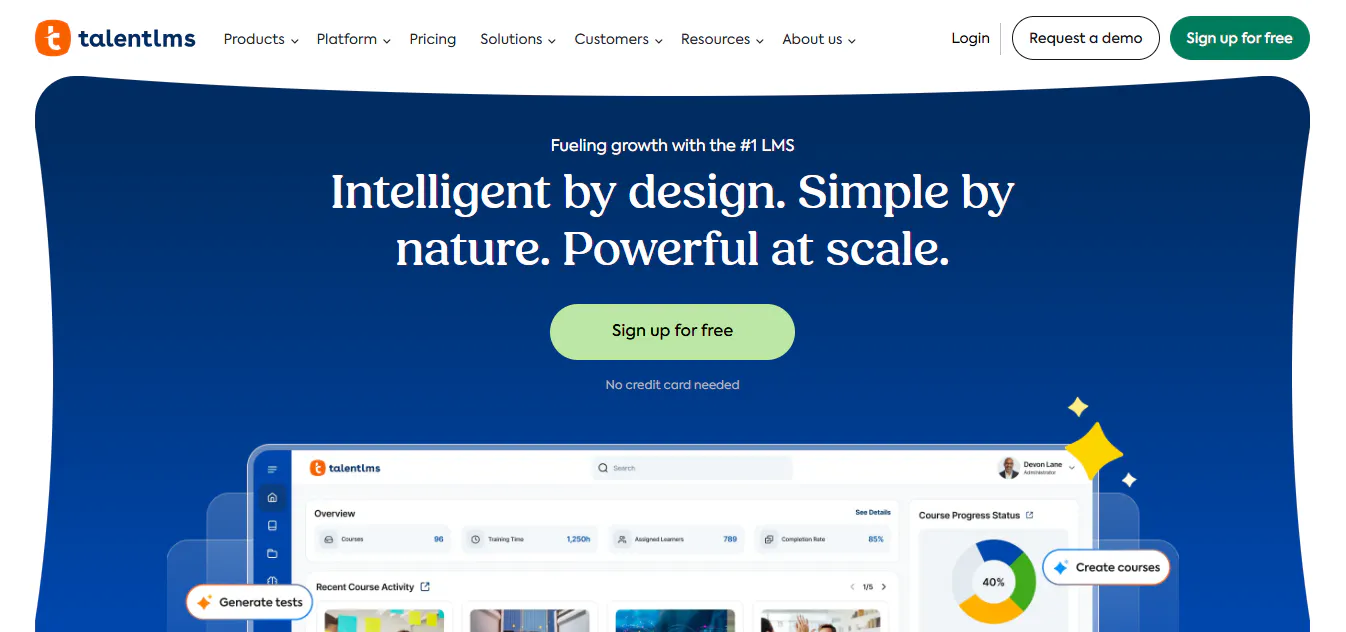
TalentLMS provides a REST API that allows businesses to connect their learning management system with HR platforms, internal applications and other business software.
Through its API, organisations can retrieve LMS data, create and manage users, courses, groups and branches, and automate enrollment and training workflows. API access is available on paid plans and uses API-key authentication.
Key Features
- REST API: Supports retrieving and managing users, courses, groups, branches and other LMS data.
- API Authentication: Uses an API key passed through the X-API-Key request header.
- API Versioning: Supports version selection through the X-API-Version request header.
- Workflow Automation: Supports user provisioning, course enrolments and training data synchronisation.
- Developer Resources: Provides API reference documentation, Postman collections and code examples.
- Additional LMS Features: Course authoring, quizzes, certifications, learning paths and reporting.
Best For
Businesses and corporate L&D teams that need REST API access to connect employee training with HR systems, internal applications and other business workflows.
Pricing
TalentLMS offers a free plan without API access. API functionality is available on paid subscriptions, including Core, Grow and Pro. Pricing varies according to the active-user tier and billing frequency, with enterprise pricing available on request.
Read more: What Is a Headless LMS?
2. Docebo
Docebo provides a suite of REST APIs that allows enterprises to connect their LMS with HR, CRM, HCM and other business applications. Its APIs support user administration, course management and learning data retrieval, while OAuth 2.0 provides authentication and authorisation.
Docebo also offers webhooks for sending event notifications to external applications when specified platform activities occur.
Key Features
- REST APIs: Provide endpoints for managing users, administering courses and retrieving learning data.
- OAuth 2.0 Authentication: Uses access tokens and role-based permissions to control API access.
- Webhooks: Send event-based notifications to configured external applications through HTTP or HTTPS requests.
- API Browser: Provides interactive API documentation and a testing environment within the Docebo platform.
- Integration Workflows: Supports connections with HR systems, business applications and external reporting tools.
- Additional LMS Features: AI-assisted learning, course management, skills development, certifications and learning analytics.
Best For
Enterprises that need API-based integration between their learning platform and existing business systems, particularly for employee, customer and partner training.
Pricing
Docebo offers customised pricing based on user volume, platform requirements and selected capabilities. Organisations need to contact its sales team for a quotation.
Read more: Cloud LMS vs On-Premise LMS
3. Moodle
Moodle provides a configurable Web Services API that enables external applications to exchange information with the LMS. Administrators can enable web services, select the communication protocols and choose which functions external applications can access.
Key Features
- Web Services API: Supports REST and other configurable protocols, including SOAP where available in the installed version.
- Custom External Services: Allows administrators to select specific functions that external applications can access.
- Token-Based Authentication: Uses security tokens to authenticate external API requests.
- User and Course Management: Supports functions for managing users, courses, groups and enrolments.
- Learning Data Access: Provides functions for retrieving gradebook information and other learning records.
- Developer Extensibility: Allows developers to create additional web service functions and extend API capabilities through plugins.
- Additional LMS Features: Course creation, assignments, quizzes, grading, forums and learning progress tracking.
Best For
Schools, colleges, universities and training organisations that need an open-source LMS with configurable API access and the flexibility to build custom integrations.
Pricing
Moodle LMS is free to download and self-host under its open-source licence. However, hosting, implementation, maintenance and development involve additional costs. MoodleCloud provides paid hosting plans, while Moodle Certified Partners offer implementation and support services.
Read more: 8 Best Alternatives to Moodle to Try in 2027
4. Quyl
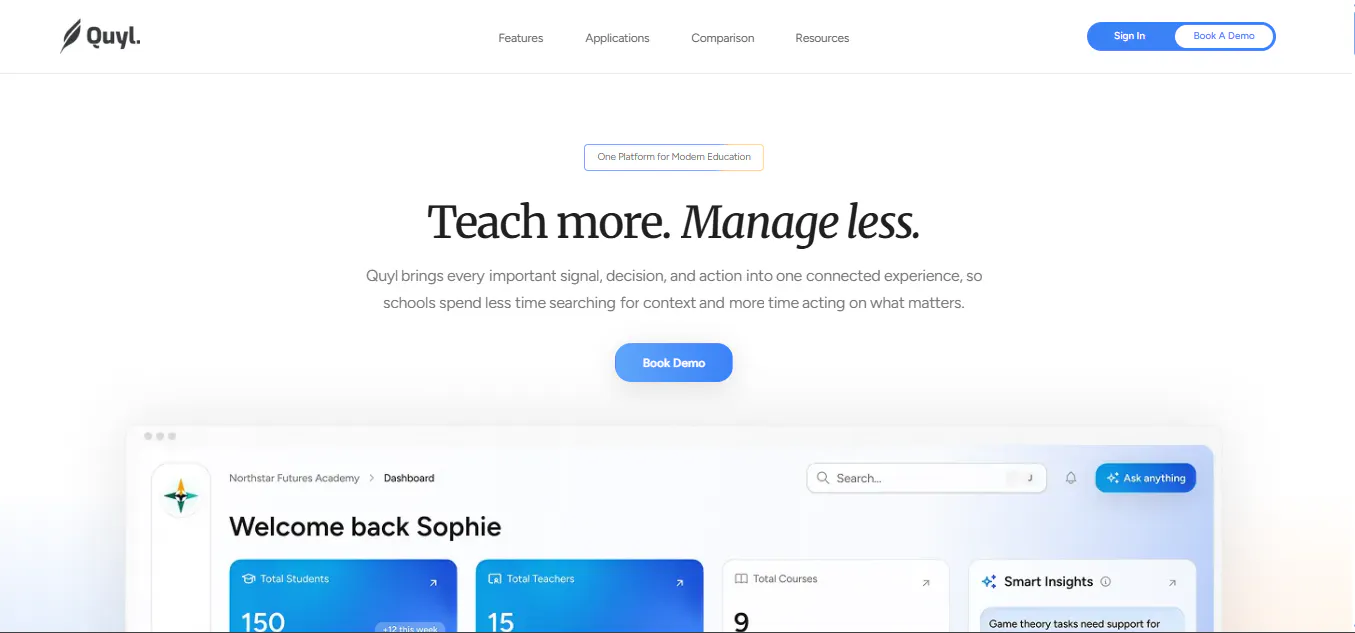
Quyl uses REST APIs built with Next.js API routes to support its internal platform functionality, including courses, users, payments, AI and uploads. For external integrations, Quyl provides a limited public Tenant API that allows websites to retrieve published course and bundle information.
Access is controlled through API keys generated by the tenant administrator and allowed-domain validation.
Key Features
- REST-Based API Architecture: Uses Next.js API routes for internal platform operations across courses, users, payments, AI and uploads.
- Public Tenant API: Allows external websites to retrieve published course and bundle data.
- API Key Management: Enables tenant administrators to create and manage API keys for external applications.
- Allowed-Domain Validation: Restricts API access based on configured website origins.
- Access Controls: Uses tenant-level configuration and rate limiting to manage external API requests.
- Additional LMS Features: Course and curriculum management, assignments, quizzes, attendance, student administration, fee management and Smart Insights.
Best For
Schools, colleges, coaching institutes and education providers that want to connect their external websites with published courses and bundle information through a controlled Tenant API.
Pricing
Quyl does not publish standard subscription pricing. Organisations can contact the Quyl team to discuss platform requirements and request a product demonstration.
Read more: Open Source LMS vs Cloud-Based LMS
5. Absorb LMS
Absorb LMS provides a REST-based Integration API for connecting external applications with its learning management platform. The API supports operations across core LMS resources, including learners, courses, departments, grades and enrolments.
It also provides webhooks for integration workflows and a SCIM 2.0 API for standardised user and group provisioning. API access may require a separate subscription or add-on.
Key Features
- REST Integration API: Supports creating, retrieving and updating LMS resources, including users, courses, departments, grades and enrolments.
- API Authentication: Supports API key-based access and OAuth 2.0 authentication options.
- Webhooks: Supports event-based communication between Absorb LMS and external applications.
- SCIM 2.0 API: Supports user and group provisioning through standardised identity management endpoints.
- Infuse API: Allows organisations to embed learning experiences within external applications.
- Additional LMS Features: Course management, SCORM and xAPI content support, assessments, certifications and learning analytics.
Best For
Mid-sized and large organisations that need custom API integrations, automated learner provisioning and connections between employee training systems and business applications.
Pricing
Absorb LMS uses customised pricing based on user volume, implementation requirements and selected capabilities. Its Integration API and other integration options may require additional enablement or paid add-ons. Organisations should confirm API availability and costs with the sales team.
Read more: Best LMS for Blended Learning
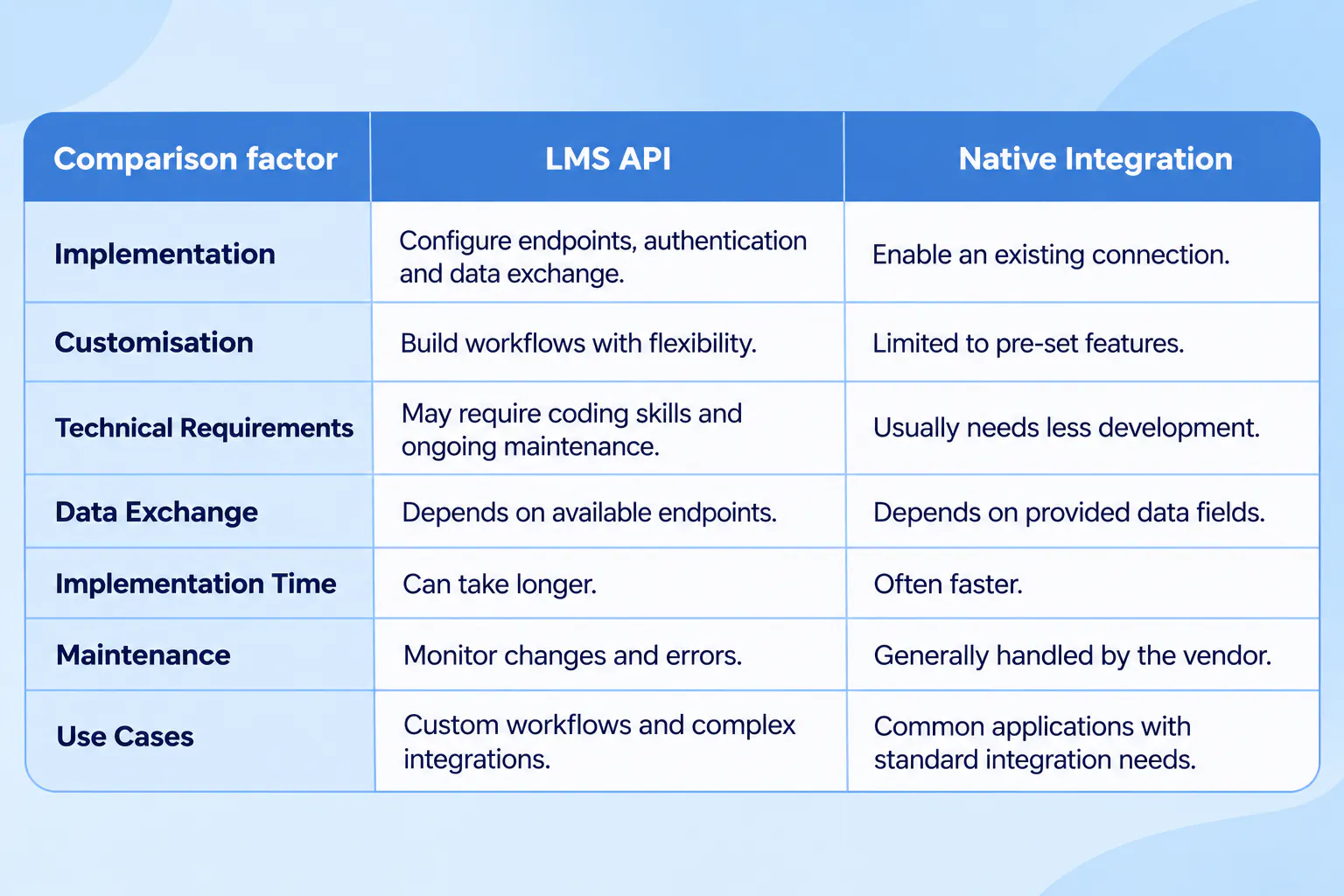
LMS API vs Native Integration: What's the Difference?
An LMS API and a native integration both connect a learning management system with external applications, but they differ in how the connection is established, configured and maintained.
- LMS API: Provides endpoints and authentication methods that developers use to build custom connections between an LMS and other applications.
- Native Integration: A pre-built connection provided by the LMS vendor or an application provider. Users can usually configure it through the platform without developing the integration from scratch.
How to Choose the Right LMS With API Integration?
To choose the right LMS with API integration, focus on how well its API supports your existing applications, data exchange requirements and future integration needs. Consider these five major factors before making a decision.
1. API Availability and Supported Endpoints: Check whether the LMS provides REST APIs, web services or other integration interfaces. More importantly, verify that its endpoints support the operations you need, such as managing users, courses, enrolments and learner records.
2. Authentication and Data Security: Evaluate how the LMS protects API access through API keys, OAuth 2.0, permissions, access controls and domain restrictions. Ensure the authentication methods and security controls meet your organisation's requirements.
3. Integration Flexibility: Assess whether the API can connect with your existing HRMS, CRM, payment systems, websites and other business applications. Check whether it supports the data exchange and custom workflows your organisation needs.
4. Documentation and Developer Support: Review the API documentation, endpoint references, code examples, testing tools and technical support available. Clear documentation makes it easier for developers to build, test and maintain integrations.
5. API Pricing and Scalability: Check whether API access is included in the LMS subscription or requires an additional plan or add-on. Also consider API usage limits, rate restrictions, version updates and whether the platform can support growing integration requirements.
Read more: Top 10 Features to Look for in an LMS in 2027
What Are Our Top Choices?
Our top 3 picks are:
1. Moodle: An open-source LMS with web service APIs that connect external applications and support learning data management and platform automation.
2. TalentLMS: A cloud-based LMS with API support for managing users, courses, and learning activities while connecting with external business applications.
3. Quyl: A configurable LMS with API access and scoped API keys that can be restricted to specific resources, including tenants, cohorts, courses, and bundles.
Conclusion
An LMS with API integration helps organisations connect their learning management platform with existing applications, automate data exchange and build workflows around their operational requirements. However, API capabilities vary across providers, from broad access to users, courses and learning records to more limited endpoints designed for specific integration needs.
Platforms such as TalentLMS, Docebo, Moodle, Quyl and Absorb LMS offer different approaches to API integration. Before selecting one, evaluate its supported endpoints, authentication methods, integration flexibility, developer resources and pricing. The right LMS should not only support your current integration requirements but also provide the flexibility to accommodate future changes in your learning environment.

